
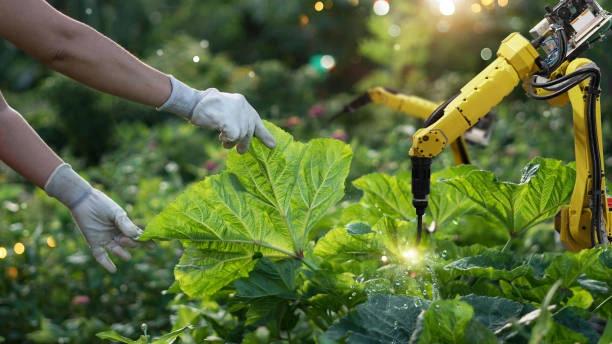
Training on Advanced Pest Management in Agriculture
Gain expertise in advanced pest management. Our training course covers critical topics like integrated pest management (IPM), biological control, and chemical application techniques.
Next intake
20 Jul 2026 · Nakuru
Duration
10 days
Live instruction
Delivery
Physical + Virtual
Cohort based
Level
Advanced
Working professionals
Certification
NITA reimbursable
For Kenyan cohorts
Language
English
All materials
About this programme
Pest Management in Agriculture is designed to equip participants with the knowledge and practical skills necessary to develop and implement integrated pest management (IPM) strategies. The course focuses on sustainable pest control methods to enhance agricultural productivity while reducing the environmental impact of conventional pesticide use. Participants will explore biological control, chemical methods, pest monitoring, and decision-making tools that are essential for effective pest management. The course also covers new trends, challenges, and innovations in pest control, with an emphasis on sustainable agriculture practices.
Duration
10 Days
Who Should Attend
- Agricultural Extension Officers
- Farm Managers and Agronomists
- Pest Control Advisors and Consultants
- Agricultural Researchers and Scientists
- Government Officials in Agriculture and Environmental Sectors
- Agricultural Students and Educators
- Agri-business Entrepreneurs
- Farm Owners and Operators
What you'll walk away with
By the end of this course, participants will be able to:
- Understand the principles and importance of integrated pest management (IPM).
- Identify common agricultural pests, diseases, and weeds affecting major crops.
- Implement biological, cultural, mechanical, and chemical pest control methods effectively.
- Monitor pest populations and predict pest outbreaks using scientific approaches.
- Minimize the impact of pesticides on non-target organisms and the environment.
- Develop IPM programs tailored to specific crops and regions.
- Analyze pest resistance and apply resistance management strategies.
- Explore new technologies and innovations in sustainable pest control practices.
What we cover, module by module
Module 1: Introduction to Pest Management in Agriculture
- Overview of Agricultural Pests (Insects, Diseases, Weeds, and Rodents)
- History and Evolution of Pest Control Practices
- The Role of Pests in Agricultural Ecosystems
- Importance of Pest Management for Food Security
Module 2: Principles of Integrated Pest Management (IPM)
- Definition and Scope of IPM
- Components and Strategies of IPM
- Economic Thresholds and Action Levels
- Decision-Making in IPM
Module 3: Pest Identification and Diagnosis
- Key Agricultural Pests of Major Crops
- Identification Techniques (Insect Pests, Weeds, Pathogens)
- Diagnostic Tools for Pest Detection
- The Role of Environmental Factors in Pest Incidence
Module 4: Biological Control of Pests
- Natural Enemies (Predators, Parasitoids, and Pathogens)
- Conservation of Beneficial Organisms
- Introduction and Augmentation of Biological Control Agents
- Case Studies on Successful Biological Control Programs
Module 5: Chemical Pest Control and Pesticide Management
- Classes of Pesticides and Modes of Action
- Safe Use, Handling, and Disposal of Pesticides
- Pesticide Resistance and Management
- Environmental and Health Impacts of Pesticides
Module 6: Cultural and Mechanical Pest Control Methods
- Crop Rotation, Intercropping, and Soil Management
- Use of Traps, Barriers, and Physical Methods
- Role of Sanitation and Hygiene in Pest Prevention
- Case Studies on Cultural and Mechanical Control Successes
Module 7: Monitoring and Surveillance of Pest Populations
- Techniques for Pest Monitoring and Forecasting
- Use of Traps, Sensors, and Other Monitoring Tools
- Analysis and Interpretation of Pest Data
- Decision Support Systems for Pest Management
Module 8: Resistance Management Strategies
- Mechanisms of Pest Resistance to Pesticides
- Resistance Management Programs
- Case Studies on Managing Pest Resistance in the Field
Module 9: Innovations and Emerging Trends in Pest Management
- Use of Drones and AI in Pest Monitoring
- Genetically Modified Organisms (GMOs) and Pest Resistance
- Biopesticides and Organic Pest Control Methods
- Advances in Pest Control Technologies
Module 10: Development of a Pest Management Plan
- Steps to Create an IPM Program for Specific Crops
- Regional Considerations and Crop-Specific Pest Control
- Hands-on Exercises: Designing and Presenting a Pest Management Plan
Where the change lands
Organizational Impact
-
The organization can significantly reduce operational costs by minimizing the use of expensive pesticides and increasing efficiency.
-
By adopting advanced pest management, the organization will produce healthier, higher-quality crops, leading to increased yields and market value.
-
This approach also enhances the organization's reputation as an environmentally responsible leader and ensures compliance with global sustainability standards.
-
The training helps the organization mitigate financial and reputational risks associated with crop failure and chemical overuse.
Personal Impact
-
The participant will gain a highly valuable and sought-after technical skill set that is essential for the future of sustainable agriculture.
-
This expertise is a crucial skill for career progression into senior farm management, technical advisory, or leadership roles.
-
The individual will be able to contribute directly to the organization's profitability and sustainability by implementing strategic pest control plans.
-
It also provides the confidence to make data-driven decisions that balance crop health with environmental responsibility.
Dates and locations
Upcoming intakes
Every intake is limited to a small cohort. Booking closes when a date fills or three weeks before the start, whichever comes first.
| City | Starts | Ends | Delivery | Book |
|---|---|---|---|---|
NakuruNext | 20 Jul 2026 | 31 Jul 2026 | In-Person | Book |
Kigali | 20 Jul 2026 | 31 Jul 2026 | In-Person | Book |
Accra | 20 Jul 2026 | 31 Jul 2026 | In-Person | Book |
Kisumu | 27 Jul 2026 | 07 Aug 2026 | In-Person | Book |
Johannesburg | 27 Jul 2026 | 07 Aug 2026 | In-Person | Book |
Dakar | 27 Jul 2026 | 07 Aug 2026 | In-Person | Book |
- NakuruNext
20 Jul → 31 Jul·In-Person
Book this intake - Kigali
20 Jul → 31 Jul·In-Person
Book this intake - Accra
20 Jul → 31 Jul·In-Person
Book this intake - Kisumu
27 Jul → 07 Aug·In-Person
Book this intake - Johannesburg
27 Jul → 07 Aug·In-Person
Book this intake - Dakar
27 Jul → 07 Aug·In-Person
Book this intake
Common questions.
Still not sure? Send us a note and a facilitator will get back to you within a business day.
You may also like.
Programmes in the same discipline that participants often pair with this course.
 Hybrid5 days
Build skills to apply AI and data analytics for smarter, more productive, and resilient agricultural systems.
 Hybrid5 days
Unlock agri-finance opportunities with this practical 5-module course—designed to help farmers and agribusinesses access funding, manage risk, and grow sustainably.
 Hybrid5 days
Advance your expertise in crop improvement with this results-driven 5-module course on plant breeding, molecular tools, and biotech integration for food security and sustainability.
Course finder
Find the right course for you
Prefer to talk it through? Send us an enquiry and a facilitator will scope a fit within a business day.
For corporate teams
Training 10+ professionals?
We deliver Training on Advanced Pest Management in Agriculture in-house at your offices, at a venue we arrange, or fully virtual. Customise the curriculum against your KPIs, and get a bespoke price for the cohort size you need.