
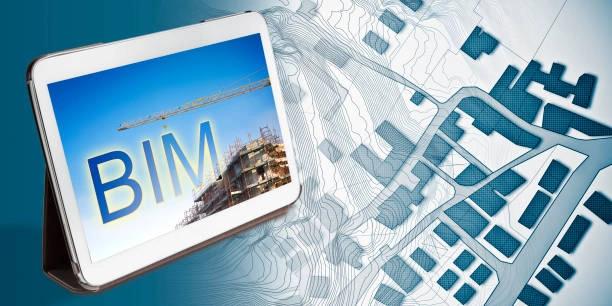
Training on CAD and BIM for Civil Engineering and Infrastructure Projects
Develop advanced CAD and BIM expertise to design, manage, and optimize civil infrastructure projects globally.
Next intake
20 Jul 2026 · Nakuru
Duration
10 days
Live instruction
Delivery
Physical + Virtual
Cohort based
Level
Advanced
Working professionals
Certification
NITA reimbursable
For Kenyan cohorts
Language
English
All materials
About this programme
This advanced course is designed to equip civil engineers, architects, and infrastructure professionals with the essential skills and knowledge to utilize Computer-Aided Design (CAD) and Building Information Modeling (BIM) effectively. Participants will gain hands-on experience in planning, designing, and managing infrastructure projects using cutting-edge digital tools that enhance collaboration, accuracy, and efficiency.
The course focuses on integrating CAD and BIM throughout the project lifecycle from conceptual design to construction and maintenance enabling participants to make data-driven decisions that improve project outcomes and sustainability.
Duration
10 Days
Who Should Attend
-
Civil and structural engineers involved in project design and delivery.
-
Architects, designers, and construction managers seeking BIM integration.
-
Project managers overseeing infrastructure or public works projects.
-
Urban planners and transportation engineers using digital modeling tools.
-
Government and private sector professionals involved in infrastructure development and asset management.
What you'll walk away with
By the end of this course, participants will be able to:
-
Apply CAD and BIM tools to design and manage infrastructure projects efficiently.
-
Integrate multidisciplinary project data for improved collaboration and decision-making.
-
Implement global BIM standards and digital workflows to ensure design accuracy.
-
Enhance visualization, documentation, and coordination across project teams.
-
Utilize BIM for lifecycle management and infrastructure asset optimization.
What we cover, module by module
Module 1: Introduction to CAD and BIM in Civil Engineering
-
Understanding the evolution and integration of CAD and BIM in infrastructure development.
-
Identifying the advantages of digital design and information management.
-
Aligning BIM processes with engineering workflows for efficiency.
-
Case Study: Transitioning from 2D design to BIM in a transportation infrastructure project.
Module 2: Advanced CAD Techniques for Infrastructure Projects
-
Developing detailed designs for roads, bridges, and water systems.
-
Layer and template management for accuracy and standardization.
-
Incorporating GIS and survey data into CAD models.
-
Case Study: CAD optimization in roadway design and cross-section analysis.
Module 3: BIM Modeling for Civil and Structural Design
-
Setting up BIM projects and building intelligent 3D models.
-
Managing interdisciplinary coordination and data-rich modeling.
-
Integrating architecture, structure, and MEP systems.
-
Case Study: BIM collaboration on a mixed-use urban infrastructure project.
Module 4: BIM Coordination, Collaboration, and Quality Control
-
Using BIM collaboration tools for multidisciplinary project integration.
-
Performing clash detection and model validation.
-
Managing interoperability between design, construction, and operation teams.
-
Case Study: Improving project delivery using BIM 360 collaboration environment.
Module 5: BIM for Lifecycle and Asset Management
-
Applying BIM to construction sequencing, cost control, and facility management.
-
Exploring digital twin concepts for asset performance monitoring.
-
Developing BIM Execution Plans (BEPs) for project consistency.
-
Case Study: Using BIM for long-term management of highway maintenance assets.
Module 6: Integration of CAD, BIM, and GIS Data
-
Combining geospatial data with BIM for infrastructure mapping and analysis.
-
Enhancing project decision-making through integrated datasets.
-
Leveraging GIS in route alignment, land use, and urban design.
-
Case Study: Integrating GIS and BIM in stormwater management planning.
Module 7: BIM Standards and Quality Assurance
-
Overview of ISO 19650 and BIM documentation standards.
-
Establishing protocols and data management systems for quality assurance.
-
Ensuring compliance with industry best practices and local regulations.
-
Case Study: Implementing BIM standards for government-led infrastructure projects.
Module 8: Automation and Customization in BIM Environments
-
Introduction to visual programming and scripting tools like Dynamo.
-
Automating repetitive design tasks to increase productivity.
-
Using APIs and plugins to enhance software functionality.
-
Case Study: Automating reinforcement detailing in a bridge design project.
Module 9: Visualization and Simulation for Decision-Making
-
Creating realistic 3D renderings and animations for presentations.
-
Using simulation tools for environmental, structural, and flow analysis.
-
Improving communication and stakeholder engagement through visual storytelling.
-
Case Study: Simulating flood resilience in an urban infrastructure model.
Module 10: Future Trends in Digital Construction and BIM
-
Exploring innovations such as digital twins, IoT, and AI-driven design.
-
Understanding the role of cloud collaboration and data analytics in smart infrastructure.
-
Adapting to evolving digital construction standards and sustainability goals.
-
Case Study: Leveraging AI-integrated BIM for predictive maintenance of infrastructure assets.
Where the change lands
Organization Impact
-
Improved design coordination and project delivery through integrated digital workflows.
-
Reduced project costs and delays through data-driven design and analysis.
-
Enhanced compliance with international BIM standards and quality assurance frameworks.
-
Increased operational efficiency and sustainability in infrastructure projects.
Individual Impact
-
Advanced proficiency in CAD and BIM applications for engineering projects.
-
Improved capacity to collaborate and communicate with multidisciplinary teams.
-
Stronger career competitiveness in a digital and data-driven construction environment.
-
Ability to lead innovation and technology adoption in project delivery.
Dates and locations
Upcoming intakes
Every intake is limited to a small cohort. Booking closes when a date fills or three weeks before the start, whichever comes first.
| City | Starts | Ends | Delivery | Book |
|---|---|---|---|---|
NakuruNext | 20 Jul 2026 | 31 Jul 2026 | In-Person | Book |
Kigali | 20 Jul 2026 | 31 Jul 2026 | In-Person | Book |
Accra | 20 Jul 2026 | 31 Jul 2026 | In-Person | Book |
Kisumu | 27 Jul 2026 | 07 Aug 2026 | In-Person | Book |
Johannesburg | 27 Jul 2026 | 07 Aug 2026 | In-Person | Book |
Dakar | 27 Jul 2026 | 07 Aug 2026 | In-Person | Book |
- NakuruNext
20 Jul → 31 Jul·In-Person
Book this intake - Kigali
20 Jul → 31 Jul·In-Person
Book this intake - Accra
20 Jul → 31 Jul·In-Person
Book this intake - Kisumu
27 Jul → 07 Aug·In-Person
Book this intake - Johannesburg
27 Jul → 07 Aug·In-Person
Book this intake - Dakar
27 Jul → 07 Aug·In-Person
Book this intake
Common questions.
Still not sure? Send us a note and a facilitator will get back to you within a business day.
You may also like.
Programmes in the same discipline that participants often pair with this course.
 Hybrid5 days
Master advanced BIM techniques and elevate your building design and construction projects. Learn to leverage advanced BIM tools and workflows to optimize project delivery, improve collaboration, and reduce costs.
 Hybrid5 days
Master advanced construction techniques and elevate your building projects. Learn to utilize cutting-edge construction methods, innovative materials, and advanced technologies to improve efficiency, quality, and sustainability.
 Hybrid5 days
Understand structural engineering. This training gives you the fundamentals to use STAAD Pro for advanced design and data-driven decisions.
Course finder
Find the right course for you
Prefer to talk it through? Send us an enquiry and a facilitator will scope a fit within a business day.
For corporate teams
Training 10+ professionals?
We deliver Training on CAD and BIM for Civil Engineering and Infrastructure Projects in-house at your offices, at a venue we arrange, or fully virtual. Customise the curriculum against your KPIs, and get a bespoke price for the cohort size you need.