
Training on Manufacturing Process Improvement with Six Sigma
Master Six Sigma techniques to enhance manufacturing quality, efficiency, and performance through data-driven process improvement.
Next intake
20 Jul 2026 · Nakuru
Duration
5 days
Live instruction
Delivery
Physical + Virtual
Cohort based
Level
Intermediate
Working professionals
Certification
NITA reimbursable
For Kenyan cohorts
Language
English
All materials
About this programme
This course equips manufacturing professionals with the analytical, strategic, and operational skills to drive process excellence through Six Sigma methodologies. Participants will learn how to identify inefficiencies, reduce waste, and enhance product quality using data-driven decision-making and continuous improvement tools.
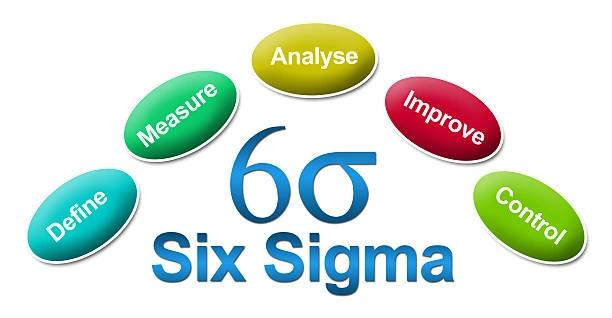
Through a practical blend of case studies, simulations, and real-world applications, participants will master the DMAIC (Define, Measure, Analyze, Improve, Control) framework and apply it to manufacturing environments to optimize performance, increase profitability, and strengthen customer satisfaction.
Duration
5 Days
Who Should Attend
-
Manufacturing and production managers.
-
Quality control and assurance professionals.
-
Process engineers and improvement specialists.
-
Operations and plant supervisors.
-
Industrial engineers and Lean Six Sigma practitioners.
What you'll walk away with
By the end of this program, participants will be able to:
-
Understand Six Sigma principles and their application in manufacturing.
-
Use DMAIC methodology to improve and control processes.
-
Apply statistical tools for root cause analysis and problem-solving.
-
Identify opportunities for cost reduction and efficiency improvement.
-
Implement sustainable process optimization strategies.
What we cover, module by module
Module 1: Fundamentals of Six Sigma and Process Excellence
- Overview of Six Sigma principles, methodologies, and certification levels
- Relationship between Six Sigma, Lean, and Total Quality Management (TQM)
- Roles and responsibilities in process improvement initiatives
- Understanding process excellence and continuous improvement culture
- Case Study: Reducing defects in an assembly line using Six Sigma tools
- Practical: Identify improvement opportunities within a sample process
Module 2: Define and Measure Phase
- Project selection and development of problem statements
- Process mapping techniques including SIPOC and flowcharts
- Data collection methods and measurement systems analysis
- Establishing baseline performance metrics
- Case Study: Mapping and measuring process performance in a production unit
- Practical: Develop a SIPOC diagram and measurement plan for a process
Module 3: Analyze Phase
- Identifying root causes of defects and process variation
- Statistical analysis tools and hypothesis testing techniques
- Pareto analysis, fishbone diagrams, and process capability analysis
- Using data to identify bottlenecks and inefficiencies
- Case Study: Analyzing process variation to identify production bottlenecks
- Practical: Conduct root cause analysis using Six Sigma tools
Module 4: Improve Phase
- Developing and prioritizing process improvement solutions
- Brainstorming, process redesign, and error proofing techniques
- Introduction to Design of Experiments (DOE)
- Implementing solutions for operational efficiency and quality improvement
- Case Study: Process redesign for yield and efficiency improvement
- Practical: Design and propose an improvement solution for a sample process
Module 5: Control Phase and Sustaining Improvements
- Developing control plans and performance monitoring systems
- Standardizing procedures and embedding continuous improvement practices
- Measuring long term performance and preventing process regression
- Building a culture of quality and operational excellence
- Case Study: Sustaining product quality improvements after Six Sigma implementation
- Practical: Develop a process control and continuous improvement plan
Where the change lands
Organizational Impact
-
Enhanced operational efficiency and productivity.
-
Reduced waste, defects, and costs through process optimization.
-
Improved product quality and customer satisfaction.
-
Stronger data-driven culture and problem-solving capability.
Individual Impact
-
Proficiency in applying Six Sigma tools and methodologies.
-
Strengthened analytical and project management skills.
-
Recognition as a key contributor to operational excellence.
-
Improved career prospects in manufacturing and process improvement roles.
Dates and locations
Upcoming intakes
Every intake is limited to a small cohort. Booking closes when a date fills or three weeks before the start, whichever comes first.
| City | Starts | Ends | Delivery | Book |
|---|---|---|---|---|
NakuruNext | 20 Jul 2026 | 24 Jul 2026 | In-Person | Book |
Kigali | 20 Jul 2026 | 24 Jul 2026 | In-Person | Book |
Accra | 20 Jul 2026 | 24 Jul 2026 | In-Person | Book |
Kisumu | 27 Jul 2026 | 31 Jul 2026 | In-Person | Book |
Johannesburg | 27 Jul 2026 | 31 Jul 2026 | In-Person | Book |
Dakar | 27 Jul 2026 | 31 Jul 2026 | In-Person | Book |
- NakuruNext
20 Jul → 24 Jul·In-Person
Book this intake - Kigali
20 Jul → 24 Jul·In-Person
Book this intake - Accra
20 Jul → 24 Jul·In-Person
Book this intake - Kisumu
27 Jul → 31 Jul·In-Person
Book this intake - Johannesburg
27 Jul → 31 Jul·In-Person
Book this intake - Dakar
27 Jul → 31 Jul·In-Person
Book this intake
Common questions.
Still not sure? Send us a note and a facilitator will get back to you within a business day.
You may also like.
Programmes in the same discipline that participants often pair with this course.
 Hybrid5 days
Master advanced BIM techniques and elevate your building design and construction projects. Learn to leverage advanced BIM tools and workflows to optimize project delivery, improve collaboration, and reduce costs.
 Hybrid5 days
Master advanced construction techniques and elevate your building projects. Learn to utilize cutting-edge construction methods, innovative materials, and advanced technologies to improve efficiency, quality, and sustainability.
 Hybrid5 days
Understand structural engineering. This training gives you the fundamentals to use STAAD Pro for advanced design and data-driven decisions.
Course finder
Find the right course for you
Prefer to talk it through? Send us an enquiry and a facilitator will scope a fit within a business day.
For corporate teams
Training 10+ professionals?
We deliver Training on Manufacturing Process Improvement with Six Sigma in-house at your offices, at a venue we arrange, or fully virtual. Customise the curriculum against your KPIs, and get a bespoke price for the cohort size you need.