
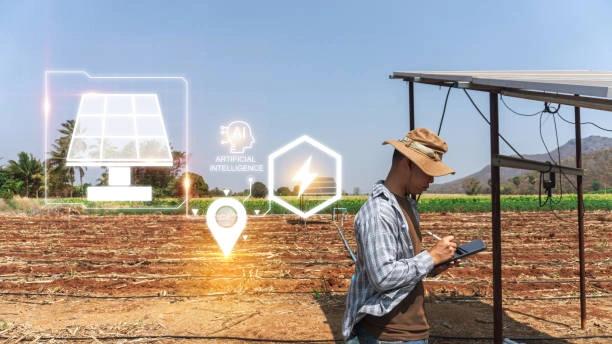
Training on Monitoring and Evaluation for Agriculture and Rural Development Projects
Master monitoring and evaluation for agriculture and rural development projects. Learn to design and implement effective M&E systems, measure agricultural productivity, assess rural development interventions, and inform evidence-based decision-making.
Next intake
20 Jul 2026 · Nakuru
Duration
10 days
Live instruction
Delivery
Physical + Virtual
Cohort based
Level
Intermediate
Working professionals
Certification
NITA reimbursable
For Kenyan cohorts
Language
English
All materials
About this programme
This course is designed to equip participants with the knowledge and skills required to effectively monitor and evaluate agriculture and rural development projects. The course covers the key principles, methodologies, and tools necessary for implementing M&E frameworks in agricultural settings. Participants will learn how to track progress, measure outcomes, and assess the impact of projects aimed at improving agricultural productivity, food security, and rural livelihoods. The course combines theoretical understanding with practical applications to ensure that participants can design and implement robust M&E systems tailored to the unique challenges of agricultural and rural development projects.
Duration
10 Days
Who Should Attend
- Project managers and coordinators involved in agriculture and rural development projects.
- M&E specialists and officers working in agricultural programs.
- Agricultural extension officers and rural development practitioners.
- Government officials and policymakers in agriculture and rural development.
- Researchers and academics interested in M&E of agricultural projects.
- NGO and civil society representatives working on rural development initiatives.
- Donor and development agency staff focusing on agriculture and rural sectors.
What you'll walk away with
By the end of this course, participants will be able to:
- Understand the fundamental concepts and principles of monitoring and evaluation in the context of agriculture and rural development.
- Develop and implement M&E frameworks tailored to agricultural projects.
- Use various tools and techniques for data collection, analysis, and reporting in agricultural settings.
- Design indicators to measure project outcomes and impacts in agriculture and rural development.
- Apply participatory M&E approaches to engage stakeholders in the evaluation process.
- Conduct baseline surveys, mid-term evaluations, and impact assessments.
- Utilize M&E results to improve project planning, implementation, and decision-making.
- Manage challenges and mitigate risks in M&E processes specific to agriculture and rural development.
- Present M&E findings effectively to stakeholders, including donors, policymakers, and community members.
- Ensure sustainability and scalability of M&E practices within agricultural projects.
What we cover, module by module
Module 1: Introduction to M&E in Agriculture and Rural Development
- Importance of M&E in agriculture and rural development
- The M&E cycle in the agricultural context
- Key challenges and opportunities in agricultural M&E
- Ethical considerations in agricultural M&E
- Case Study: Improving accountability in a rural agriculture support program
Module 2: Agricultural Project Design and M&E Frameworks
- Logical frameworks for agricultural projects
- Results-based management (RBM) in agriculture
- Developing indicators for agricultural outcomes
- Baseline surveys and data collection
- Case Study: Designing an M&E framework for a crop productivity project
Module 3: Monitoring Agricultural Inputs and Processes
- Monitoring agricultural inputs (seeds, fertilizers, technology)
- Monitoring agricultural practices (crop rotation, irrigation, pest management)
- Data collection methods for agricultural inputs and processes
- Case Study: Tracking fertilizer distribution and farmer adoption rates
Module 4: Monitoring Agricultural Outputs and Outcomes
- Measuring agricultural production and yield
- Assessing the impact of agricultural projects on livelihoods
- Monitoring food security and nutrition
- Gender and social inclusion indicators
- Case Study: Measuring yield improvement and household income changes
Module 5: Data Collection Methods for Agriculture
- Participatory monitoring and evaluation (PME)
- Household surveys and interviews
- Field observations and experiments
- Geographic Information Systems (GIS) for agriculture
- Case Study: Using GIS mapping to monitor farm performance
Module 6: Data Analysis and Interpretation for Agriculture
- Statistical analysis for agricultural data
- Economic analysis of agricultural projects
- Using data visualization for agricultural M&E
- Identifying lessons learned from agricultural projects
- Case Study: Analyzing seasonal production trends for decision-making
Module 7: M&E for Agricultural Value Chains
- Monitoring agricultural value chains
- Assessing market linkages and access
- Measuring the impact of agricultural interventions on market systems
- Case Study: Evaluating farmer access to markets through aggregation centers
Module 8: M&E for Climate-Smart Agriculture
- Monitoring climate change impacts on agriculture
- Evaluating climate-smart agriculture technologies and practices
- Measuring the adaptation and mitigation benefits of climate-smart agriculture
- Case Study: Assessing adoption of drought-resistant seed varieties
Module 9: Capacity Building for Agricultural M&E
- Building M&E capacity among farmers and communities
- Training M&E staff in agricultural contexts
- Knowledge management and sharing for agricultural M&E
- Case Study: Strengthening farmer groups through community-based monitoring systems
Module 10: Using M&E for Policy and Decision Making in Agriculture
- Evidence-based policymaking in agriculture
- Using M&E to inform agricultural investments
- Scaling up successful agricultural interventions
- Case Study: Using project evidence to expand a successful irrigation program
Where the change lands
Organizational Impact
-
Systematically measure and improve agriculture and rural development projects for better outcomes.
-
Enhance credibility with donors to secure grants and funding.
-
Use data-driven decisions and lessons learned to allocate resources effectively.
Personal Impact
-
Gain a specialized skill set for measuring impact in agriculture and rural development.
-
Advance into senior program management, leadership, or research roles.
-
Move from task management to proving value and impact in rural development.
Dates and locations
Upcoming intakes
Every intake is limited to a small cohort. Booking closes when a date fills or three weeks before the start, whichever comes first.
| City | Starts | Ends | Delivery | Book |
|---|---|---|---|---|
NakuruNext | 20 Jul 2026 | 31 Jul 2026 | In-Person | Book |
Kigali | 20 Jul 2026 | 31 Jul 2026 | In-Person | Book |
Accra | 20 Jul 2026 | 31 Jul 2026 | In-Person | Book |
Kisumu | 27 Jul 2026 | 07 Aug 2026 | In-Person | Book |
Johannesburg | 27 Jul 2026 | 07 Aug 2026 | In-Person | Book |
Dakar | 27 Jul 2026 | 07 Aug 2026 | In-Person | Book |
- NakuruNext
20 Jul → 31 Jul·In-Person
Book this intake - Kigali
20 Jul → 31 Jul·In-Person
Book this intake - Accra
20 Jul → 31 Jul·In-Person
Book this intake - Kisumu
27 Jul → 07 Aug·In-Person
Book this intake - Johannesburg
27 Jul → 07 Aug·In-Person
Book this intake - Dakar
27 Jul → 07 Aug·In-Person
Book this intake
Common questions.
Still not sure? Send us a note and a facilitator will get back to you within a business day.
You may also like.
Programmes in the same discipline that participants often pair with this course.
 Hybrid5 days
Upgrade your digital skills with advanced computer training tailored for office administrators and secretaries.
 Hybrid10 days
Master advanced impact evaluation for evidence-based development. Learn to design and implement rigorous impact evaluations using advanced statistical methods and mixed-methods approaches.
 Hybrid5 days
Advanced training in M&E and data management for health professionals—improving reporting, policy, and program impact.
Course finder
Find the right course for you
Prefer to talk it through? Send us an enquiry and a facilitator will scope a fit within a business day.
For corporate teams
Training 10+ professionals?
We deliver Training on Monitoring and Evaluation for Agriculture and Rural Development Projects in-house at your offices, at a venue we arrange, or fully virtual. Customise the curriculum against your KPIs, and get a bespoke price for the cohort size you need.