
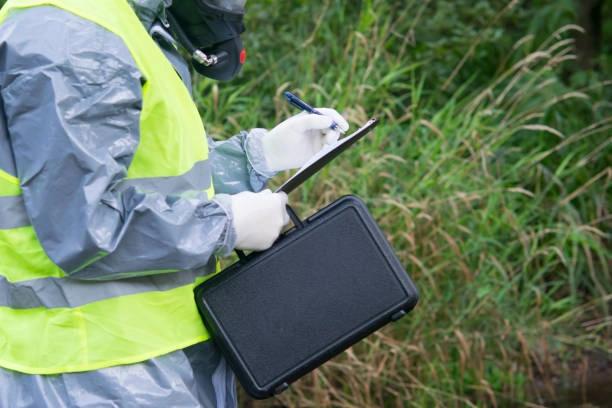
Training on Occupational Hygiene & Environmental Monitoring
Advance your OHS skills. Master workplace assessments, exposure control, and environmental monitoring to improve industrial hygiene and employee safety
Next intake
20 Jul 2026 · Nakuru
Duration
10 days
Live instruction
Delivery
Physical + Virtual
Cohort based
Level
Intermediate
Working professionals
Certification
NITA reimbursable
For Kenyan cohorts
Language
English
All materials
About this programme
This course is designed to build essential knowledge and practical skills for professionals responsible for maintaining safe, healthy, and compliant workplace environments. Participants will learn to perform comprehensive workplace environmental health assessments, implement strategies for controlling exposure to hazardous substances, and manage air quality monitoring in factories. The course also explores effective techniques for noise and vibration control in industry and introduces core occupational hygiene principles and practices aligned with international standards.
Duration
10 Days
Who Should Attend
-
Occupational Hygienists
-
Environmental Health and Safety (EHS) Professionals
-
Industrial Safety Managers
-
Facility and Maintenance Supervisors
-
Compliance and Regulatory Officers
What you'll walk away with
By the end of this course, participants will:
-
Conduct thorough workplace environmental health assessments
-
Apply controls for exposure to hazardous substances
-
Execute air quality monitoring in factories using appropriate tools
-
Design programs for noise and vibration control in industry
-
Implement core occupational hygiene principles and practices effectively
What we cover, module by module
Module 1: Foundations of Occupational Hygiene and Industrial Health
- Principles and scope of occupational hygiene in workplace health and safety
- Recognition, evaluation, and control of workplace environmental hazards
- Role of occupational hygiene in preventing occupational diseases and injuries
- Legal, ethical, and regulatory responsibilities in industrial environments
- Integration of occupational hygiene into OHS management systems
- Case Study: Occupational hygiene best practices in industrial operations
- Practical Activity: Identifying workplace environmental hazards and exposure risks
Module 2: Workplace Environmental Health Assessment and Risk Evaluation
- Techniques for workplace environmental and exposure assessments
- Hazard identification, exposure pathways, and risk prioritization methods
- Environmental monitoring strategies and compliance requirements
- Documentation, reporting, and corrective action planning
- Conducting workplace inspections and occupational hygiene audits
- Case Study: Environmental risk assessment in manufacturing facilities
- Practical Exercise: Performing a workplace environmental health assessment
Module 3: Chemical Hazard Management and Exposure Control
- Classification and identification of hazardous substances in the workplace
- Chemical exposure routes and associated health effects
- Engineering controls, administrative controls, and PPE strategies
- Occupational exposure limits (OELs) and exposure monitoring techniques
- Safe handling, storage, and emergency response procedures for chemicals
- Case Study: Controlling hazardous substance exposure in industrial settings
- Practical Activity: Developing a chemical exposure control plan
Module 4: Air Quality Monitoring and Ventilation Management
- Principles of industrial air quality monitoring and exposure assessment
- Monitoring airborne contaminants including dusts, gases, vapors, and fumes
- Indoor air quality standards and occupational health implications
- Ventilation systems, local exhaust ventilation, and airflow evaluation
- Maintaining and optimizing industrial ventilation systems
- Case Study: Improving air quality management in factory environments
- Practical Exercise: Conducting workplace air quality monitoring and ventilation assessment
Module 5: Noise, Vibration, and Physical Hazard Control
- Health effects of occupational noise and vibration exposure
- Noise and vibration monitoring methods and exposure standards
- Engineering and administrative controls for physical hazards
- Hearing conservation and vibration reduction programs
- Managing thermal stress, radiation, and ergonomic hazards
- Case Study: Occupational noise reduction strategies in heavy industry
- Practical Activity: Measuring and evaluating workplace noise and vibration exposure
Module 6: Biological Hazards and Occupational Exposure Monitoring
- Identification and management of biological hazards in workplaces
- Monitoring exposure to pathogens, mold, and bioaerosols
- Infection prevention and workplace hygiene practices
- Combined exposure risks involving biological, chemical, and physical agents
- Emergency response and containment procedures for biological incidents
- Case Study: Managing biological risks in healthcare and manufacturing sectors
- Practical Exercise: Conducting a biological hazard risk assessment
Module 7: Occupational Hygiene Sampling and Laboratory Analysis
- Principles of occupational hygiene sampling methodologies
- Air, surface, noise, and material sampling procedures
- Laboratory analysis techniques and interpretation of results
- Chain of custody, quality assurance, and data integrity practices
- Reporting exposure monitoring findings effectively
- Case Study: Laboratory-based exposure investigations in industrial workplaces
- Practical Activity: Developing a workplace sampling and analysis protocol
Module 8: Engineering Controls and Industrial Ventilation Systems
- Principles and applications of industrial ventilation systems
- Local exhaust ventilation (LEV) design and maintenance practices
- Evaluating engineering controls for effectiveness and compliance
- Hierarchy of controls in occupational hygiene management
- Continuous improvement of workplace control measures
- Case Study: Engineering control interventions reducing workplace exposure risks
- Practical Exercise: Assessing the performance of industrial ventilation systems
Module 9: Occupational Hygiene Compliance, Reporting, and Auditing
- Occupational hygiene regulations, standards, and compliance obligations
- Hygiene monitoring records, reporting formats, and documentation systems
- Audit preparation and regulatory inspection readiness
- Communicating occupational hygiene findings to management and stakeholders
- Developing corrective action and compliance improvement plans
- Case Study: Occupational hygiene compliance audits in regulated industries
- Practical Activity: Preparing an occupational hygiene compliance report
Module 10: Designing and Managing Occupational Hygiene Monitoring Programs
- Developing integrated occupational hygiene and environmental monitoring programs
- Aligning hygiene monitoring with organizational OHS objectives
- Data analysis, trend monitoring, and continuous improvement strategies
- Sustainability and long-term occupational exposure management
- Emerging trends and technologies in occupational hygiene practice
- Case Study: Enterprise-wide occupational hygiene monitoring implementation
- Final Project: Developing a site-specific occupational hygiene and environmental monitoring framework
Where the change lands
Organizational Impact
-
The organization can significantly reduce the risk of occupational diseases, leading to lower costs from healthcare, worker's compensation, and legal fees.
-
By implementing robust monitoring protocols, the organization ensures it meets and exceeds stringent environmental and safety regulations, thereby mitigating liability and reputational risk.
-
A strong commitment to protecting both workers and the environment enhances the organization's reputation and builds trust with the community, regulators, and stakeholders.
-
The training provides the knowledge to ensure the organization's operations are sustainable and viable in the long term, protecting both its people and the planet.
Personal Impact
-
The participant will gain a highly valuable and specialized skill set at the intersection of health, safety, and environmental science.
-
This expertise is a crucial skill for career progression into senior EHS, compliance, or operational leadership roles.
-
The individual will be able to contribute directly to the organization's long-term viability and reputation by protecting its people and minimizing its environmental footprint.
-
The training provides the confidence and authority to use scientific methods to manage complex and high-stakes health and environmental risks.
Dates and locations
Upcoming intakes
Every intake is limited to a small cohort. Booking closes when a date fills or three weeks before the start, whichever comes first.
| City | Starts | Ends | Delivery | Book |
|---|---|---|---|---|
NakuruNext | 20 Jul 2026 | 31 Jul 2026 | In-Person | Book |
Kigali | 20 Jul 2026 | 31 Jul 2026 | In-Person | Book |
Accra | 20 Jul 2026 | 31 Jul 2026 | In-Person | Book |
Kisumu | 27 Jul 2026 | 07 Aug 2026 | In-Person | Book |
Johannesburg | 27 Jul 2026 | 07 Aug 2026 | In-Person | Book |
Dakar | 27 Jul 2026 | 07 Aug 2026 | In-Person | Book |
- NakuruNext
20 Jul → 31 Jul·In-Person
Book this intake - Kigali
20 Jul → 31 Jul·In-Person
Book this intake - Accra
20 Jul → 31 Jul·In-Person
Book this intake - Kisumu
27 Jul → 07 Aug·In-Person
Book this intake - Johannesburg
27 Jul → 07 Aug·In-Person
Book this intake - Dakar
27 Jul → 07 Aug·In-Person
Book this intake
Common questions.
Still not sure? Send us a note and a facilitator will get back to you within a business day.
You may also like.
Programmes in the same discipline that participants often pair with this course.
 Hybrid5 days
Strategic management training for healthcare leaders. Build sustainable, patient-centered, and innovative health systems.
 Hybrid5 days
Equip healthcare professionals with AI literacy, digital competencies, and practical knowledge to support smarter healthcare delivery.
 Hybrid5 days
Learn to apply AI and predictive analytics to prevent workplace accidents and improve safety performance.
Course finder
Find the right course for you
Prefer to talk it through? Send us an enquiry and a facilitator will scope a fit within a business day.
For corporate teams
Training 10+ professionals?
We deliver Training on Occupational Hygiene & Environmental Monitoring in-house at your offices, at a venue we arrange, or fully virtual. Customise the curriculum against your KPIs, and get a bespoke price for the cohort size you need.