
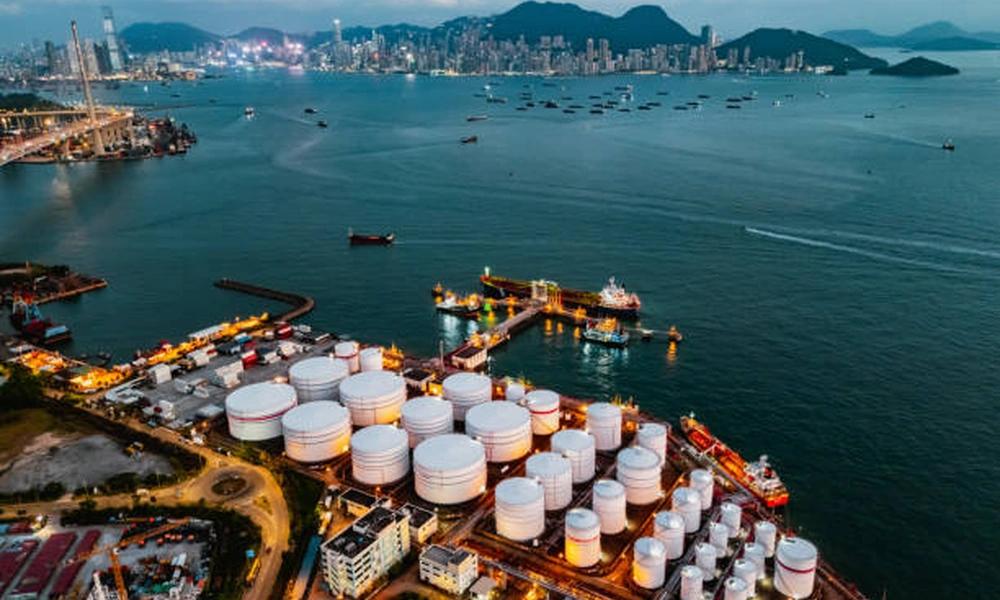
Training on Oil and Gas Marine Terminals and Crude Oil Export Logistics
Optimize crude oil export logistics. This course covers SPMs, loading arms, scheduling, and demurrage management.
Next intake
20 Jul 2026 · Nakuru
Duration
10 days
Live instruction
Delivery
Physical + Virtual
Cohort based
Level
Advanced
Working professionals
Certification
NITA reimbursable
For Kenyan cohorts
Language
English
All materials
About this programme
This advanced course provides specialized training on the operation and logistics of oil and gas marine terminals, including crude oil export terminals, refined product jetties, and LNG marine facilities. Participants will learn to manage vessel berthing, cargo transfer, marine safety, custody measurement, and interface with shipping lines and tanker operators.
Who Should Attend:
-
Marine Terminal Operations Managers
-
Crude Oil Export Coordinators
-
Jetty Supervisors and Marine Superintendents
-
Logistics Planners for Oil and Gas Exports
What you'll walk away with
-
Manage crude oil and product marine terminal operations.
-
Coordinate vessel berthing, mooring, and cargo transfer.
-
Implement marine safety, mooring, and emergency response procedures.
-
Ensure accurate custody measurement and loss control.
What we cover, module by module
Module 1: Marine Terminal Types and Configurations
-
Crude oil export terminals: offshore SPM (single point mooring), CALM buoy, and fixed jetty.
-
Refined product jetties and chemical terminals.
-
LNG marine terminals: jetty, trestle, and berthing pockets.
-
Terminal layout: berths, loading arms, piping, pumps, and storage.
-
Case Study/Hands-on Exercise: Design a marine terminal layout for an export facility handling 500,000 bbl/day of crude oil, including berths, loading arms, and storage.
Module 2: Vessel Types and Characteristics
-
Crude carriers: VLCC, Suezmax, Aframax, Panamax, and coastal tankers.
-
Product tankers, chemical tankers, and LNG carriers.
-
Vessel dimensions, draft, and deadweight tonnage (DWT).
-
Case Study/Hands-on Exercise: Match vessel types to terminal berth specifications (e.g., maximum draft, beam, and length overall), identifying compatibility.
Module 3: Berth Management and Vessel Scheduling
-
Vessel scheduling systems and berth allocation optimization.
-
Laytime and demurrage management.
-
Port congestion mitigation and tidal/weather restrictions.
-
Case Study/Hands-on Exercise: Schedule 10 vessels for a single-berth terminal over 7 days, minimizing waiting time and demurrage costs.
Module 4: Mooring and Berthing Operations
-
Mooring systems: mooring lines, winches, and quick-release hooks.
-
Tugboat assistance for berthing and unberthing.
-
Berthing velocity, fendering, and breasting dolphins.
-
Case Study/Hands-on Exercise: Plan a berthing operation for a VLCC at an offshore SPM, including tug assignment, mooring line configuration, and safety checks.
Module 5: Cargo Transfer Systems and Loading Arms
-
Loading arms: hydraulic, manual, and swivel joints (chiksan).
-
Pipeline transfer rates, backpressure, and surge protection.
-
Vapor return systems and emissions control.
-
Case Study/Hands-on Exercise: Design a cargo transfer plan for a crude oil tanker, including loading arm connection, transfer rate, vapor return, and topping off.
Module 6: Custody Transfer Measurement and Sampling
-
Metering systems for marine terminals: ultrasonic and turbine meters.
-
Proving meters and meter factor determination.
-
Automatic sampling systems and cargo quality certification.
-
Case Study/Hands-on Exercise: Calculate the custody transfer quantity for a crude oil cargo using meter factors, temperature correction, and water cut analysis.
Module 7: Marine Safety and Emergency Response
-
Pre-arrival safety briefing and ship-shore safety checklist (ISGOTT).
-
Emergency shutdown systems (ESD), firefighting, and spill response.
-
Man overboard, medevac, and oil spill containment at berth.
-
Case Study/Hands-on Exercise: Simulate an emergency response to a loading arm leak during transfer, including ESD activation, spill containment, and notification procedures.
Module 8: LNG Marine Terminal Operations
-
LNG carrier characteristics and compatibility.
-
LNG transfer: loading arms with double swivel joints, dry disconnect couplings.
-
Vapor return and boil-off gas management during transfer.
-
Case Study/Hands-on Exercise: Plan an LNG cargo transfer at a regasification terminal, including pre-transfer checks, loading arm connection, and commissioning.
Module 9: Marine Terminal Maintenance and Inspection
-
Mooring hardware inspection and replacement.
-
Loading arm maintenance, hydraulic system testing, and leak testing.
-
Dredging and berth pocket surveys.
-
Case Study/Hands-on Exercise: Develop a maintenance inspection plan for a marine terminal, including frequency, critical components, and safety protocols.
Module 10: Regulatory Compliance and Environmental Management
-
ISPS Code (maritime security) for terminals.
-
MARPOL compliance: oily water separators, ballast water management, and waste reception.
-
Environmental monitoring: water quality, noise, and emissions.
-
Case Study/Hands-on Exercise: Conduct a regulatory compliance audit for a marine terminal against ISPS and MARPOL requirements, identifying gaps and corrective actions.
Where the change lands
Organizational Impacts:
-
Reduced vessel turnaround time and demurrage costs.
-
Improved cargo transfer safety and environmental compliance.
-
Enhanced measurement accuracy and loss control.
Individual Impacts:
-
Mastery of marine terminal operations and vessel interface.
-
Expertise in cargo transfer systems, loading arms, and vapor control.
-
Skills to manage vessel scheduling, berth allocation, and custody transfer.
Dates and locations
Upcoming intakes
Every intake is limited to a small cohort. Booking closes when a date fills or three weeks before the start, whichever comes first.
| City | Starts | Ends | Delivery | Book |
|---|---|---|---|---|
NakuruNext | 20 Jul 2026 | 31 Jul 2026 | In-Person | Book |
Kigali | 20 Jul 2026 | 31 Jul 2026 | In-Person | Book |
Accra | 20 Jul 2026 | 31 Jul 2026 | In-Person | Book |
Kisumu | 27 Jul 2026 | 07 Aug 2026 | In-Person | Book |
Johannesburg | 27 Jul 2026 | 07 Aug 2026 | In-Person | Book |
Dakar | 27 Jul 2026 | 07 Aug 2026 | In-Person | Book |
- NakuruNext
20 Jul → 31 Jul·In-Person
Book this intake - Kigali
20 Jul → 31 Jul·In-Person
Book this intake - Accra
20 Jul → 31 Jul·In-Person
Book this intake - Kisumu
27 Jul → 07 Aug·In-Person
Book this intake - Johannesburg
27 Jul → 07 Aug·In-Person
Book this intake - Dakar
27 Jul → 07 Aug·In-Person
Book this intake
Common questions.
Still not sure? Send us a note and a facilitator will get back to you within a business day.
You may also like.
Programmes in the same discipline that participants often pair with this course.
 Hybrid10 days
Professional training on crisis and emergency response management for oil and gas facilities, covering preparedness, incident command, and business continuity.
Hybrid10 daysBuild expertise in IoT, SCADA, predictive maintenance, and digital oilfield solutions for optimized production performance.
 Hybrid5 days
Optimize drilling fluid supply and recycling operations. This intermediate course covers solids control, mud properties, and environmental compliance.
Course finder
Find the right course for you
Prefer to talk it through? Send us an enquiry and a facilitator will scope a fit within a business day.
For corporate teams
Training 10+ professionals?
We deliver Training on Oil and Gas Marine Terminals and Crude Oil Export Logistics in-house at your offices, at a venue we arrange, or fully virtual. Customise the curriculum against your KPIs, and get a bespoke price for the cohort size you need.