
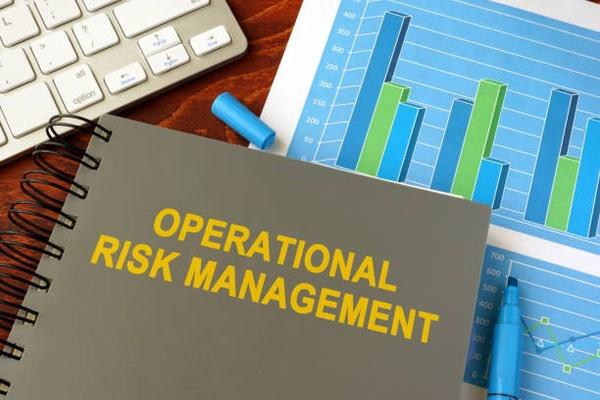
Training on Operational Risk Management in Financial Services
Gain practical operational risk management skills for banks, SACCOs, and insurers using global risk frameworks.
Next intake
20 Jul 2026 · Dakar
Duration
10 days
Live instruction
Delivery
Physical + Virtual
Cohort based
Level
Advanced
Working professionals
Certification
NITA reimbursable
For Kenyan cohorts
Language
English
All materials
About this programme
This course equips financial services professionals with in-depth knowledge and structured approaches to identify, assess, mitigate, and monitor operational risks across financial institutions. It focuses on operational risk drivers such as people, processes, systems, external events, fraud, compliance failures, and business disruptions. The course integrates global risk management frameworks with sector-specific operational risk practices to strengthen resilience, governance, and sustainable performance in financial services.
Duration
10 Days
Who Should Attend:
-
Operational risk managers and officers
-
Bank, SACCO, and insurance operations managers
-
Compliance and internal control officers
-
Internal auditors and risk committee members
-
Finance, IT, and business continuity professionals
What you'll walk away with
By the end of this course, participants will be able to:
-
Understand operational risk concepts and regulatory expectations
-
Identify and assess operational risks across financial services
-
Develop and maintain operational risk registers
-
Design effective risk controls and mitigation strategies
-
Strengthen business continuity, resilience, and incident response
-
Improve operational risk reporting and oversight
What we cover, module by module
Module 1: Introduction to Operational Risk Management
- Definition and scope of operational risk
- Operational risk in banks, SACCOs, and insurers
- Regulatory and governance expectations
- Case Study: Major operational risk failures in financial institutions
- Practical: Identifying key operational risks in participants’ institutions
Module 2: Operational Risk Frameworks & Governance
- Operational risk management frameworks
- Roles of boards, management, and committees
- Policies, procedures, and risk ownership
- Case Study: Weak governance and operational risk events
- Practical: Designing an operational risk governance structure
Module 3: Risk Identification Techniques
- Process mapping and risk identification
- Risk and Control Self-Assessments (RCSAs)
- Loss event data and risk indicators
- Case Study: Process breakdowns and operational losses
- Practical: Conducting an RCSA exercise
Module 4: Operational Risk Assessment & Measurement
- Risk scoring and prioritization
- Qualitative vs quantitative assessment
- Risk appetite and tolerance for operational risk
- Case Study: Misaligned risk appetite and losses
- Practical: Developing an operational risk heat map
Module 5: People Risk, Fraud & Conduct Risk
- Human error, skills gaps, and capacity risk
- Internal and external fraud risk
- Conduct risk and ethical failures
- Case Study: Fraud and misconduct incidents
- Practical: Designing fraud risk controls
Module 6: Process, Systems & Technology Risk
- Process failures and control weaknesses
- IT risk, system outages, and data integrity
- Cyber risk and digital operations
- Case Study: System failures in financial services
- Practical: Assessing system-related operational risks
Module 7: Third-Party & Outsourcing Risk
- Vendor and supplier risk
- Outsourcing and service level agreements
- Monitoring and assurance of third parties
- Case Study: Outsourced service failures
- Practical: Developing a third-party risk assessment
Module 8: Business Continuity & Operational Resilience
- Business Continuity Planning (BCP)
- Disaster recovery and crisis management
- Operational resilience frameworks
- Case Study: Business disruptions and recovery failures
- Practical: Developing a business continuity plan
Module 9: Operational Risk Monitoring, Reporting & KRIs
- Key Risk Indicators (KRIs)
- Incident reporting and loss event analysis
- Reporting to management and boards
- Case Study: Effective operational risk dashboards
- Practical: Designing operational risk reports
Module 10: Integrating Operational Risk into Enterprise Risk & Strategy
- Operational risk within ERM
- Risk culture and continuous improvement
- Course review and final assessment
- Case Study: Successful operational risk integration
- Practical: Developing an institutional operational risk action plan
Where the change lands
Personal Impact:
-
Strong operational risk identification and analysis skills
-
Improved confidence in managing operational risk events
-
Enhanced professional competence in risk management
Organizational Impact:
-
Reduced operational losses and disruptions
-
Stronger controls, compliance, and governance
-
Improved operational resilience and service continuity
Dates and locations
Upcoming intakes
Every intake is limited to a small cohort. Booking closes when a date fills or three weeks before the start, whichever comes first.
| City | Starts | Ends | Delivery | Book |
|---|---|---|---|---|
DakarNext | 20 Jul 2026 | 31 Jul 2026 | In-Person | Book |
Johannesburg | 20 Jul 2026 | 31 Jul 2026 | In-Person | Book |
Dar es Salaam | 20 Jul 2026 | 31 Jul 2026 | In-Person | Book |
Nakuru | 20 Jul 2026 | 31 Jul 2026 | In-Person | Book |
Pretoria | 27 Jul 2026 | 07 Aug 2026 | In-Person | Book |
Kisumu | 27 Jul 2026 | 07 Aug 2026 | In-Person | Book |
- DakarNext
20 Jul → 31 Jul·In-Person
Book this intake - Johannesburg
20 Jul → 31 Jul·In-Person
Book this intake - Dar es Salaam
20 Jul → 31 Jul·In-Person
Book this intake - Nakuru
20 Jul → 31 Jul·In-Person
Book this intake - Pretoria
27 Jul → 07 Aug·In-Person
Book this intake - Kisumu
27 Jul → 07 Aug·In-Person
Book this intake
Common questions.
Still not sure? Send us a note and a facilitator will get back to you within a business day.
You may also like.
Programmes in the same discipline that participants often pair with this course.
 Hybrid5 days
Learn to design and manage Activity-Based Budgets that enhance transparency, efficiency, and accountability in the public sector.
 Hybrid10 days
Learn SAP, Oracle, and NetSuite finance modules for financial reporting, budgeting, accounts management, compliance, and ERP process optimization.
 Hybrid5 days
Master iTAX for efficient tax filing, reporting, and compliance in corporate and personal finance.
Course finder
Find the right course for you
Prefer to talk it through? Send us an enquiry and a facilitator will scope a fit within a business day.
For corporate teams
Training 10+ professionals?
We deliver Training on Operational Risk Management in Financial Services in-house at your offices, at a venue we arrange, or fully virtual. Customise the curriculum against your KPIs, and get a bespoke price for the cohort size you need.