
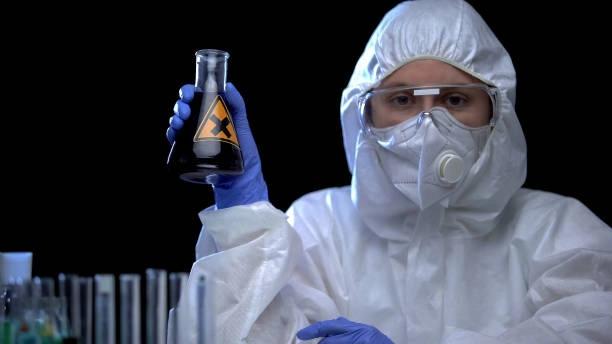
Training on Toxins Identification, Risk Assessment & Quality Assurance
Gain practical skills in toxin identification, risk assessment and quality assurance to enhance safety, compliance, and operational standards.
Duration
5 days
Live instruction
Delivery
Physical + Virtual
Cohort based
Level
Intermediate
Working professionals
Certification
NITA reimbursable
For Kenyan cohorts
Language
English
All materials
About this programme
This course provides an in-depth understanding of toxins from their classification and biochemical pathways to detection, analysis, safety handling, and regulatory compliance frameworks.Tailored to a Principal Quality Assurance Officer,it emphasizes quality management systems,documentation, auditing, and risk mitigation throughout the toxin-related workflow.
Participants will gain the competence to strengthen QA oversight ensure adherence to of toxin management processes, local/international standards, and implement robust controls that minimize risks to personne consumers, and the environment.
Duration
5 Days
Who Should Attend
• Principal Quality Assurance Officers
• Senior Laboratory Officers
• Regulatory Compliance Officers
• Environmental Health Specialists
• Occupational Safety Officers
What you'll walk away with
By the end of this course, participants will:
- Understand different categories of toxins and their mechanisms of action.
- Identify contamination sources and pathways in food, pharmaceuticals, water, and environmental samples.
- Apply QA tools to ensure compliance with toxin safety standards (ISO, WHO, FDA,OECD).
- Conduct risk assessments and implement mitigation strategies.
- Evaluate laboratory testing methods for toxin detection and verification.
- Strengthen documentation, SOPs, and audit procedures relevant to toxin control.
- Develop incident reporting frameworks and corrective/preventive action plans (CAPA).
What we cover, module by module
Module 1: Fundamentals of Toxins & Toxicology for QA Oversight
• Definitions: toxins, toxicants, xenobiotics
• Categories of toxins (biological, chemical, environmental, industrial, food, microbial, mycotoxins, heavy metals, etc.)
• Understanding dose-response relationships
• Mechanisms of toxicity: cellular, organ-level, systemic
• Exposure pathways and contamination routes
• Quality Assurance considerations in toxin management
• Case Study: Aflatoxin contamination in food supply chains
• Practical Exercise: Toxin risk identification and classification map for a given product/environment.
Module 2: Toxin Detection, Sampling & Laboratory Quality Management
• Laboratory methods for toxin detection:
o Chromatography (HPLC, GC-MS)
o Immunoassays (ELISA)
o Molecular methods
• QA role in ensuring accuracy, precision, repeatability
• Sampling plans and chain-of-custody documentation
• Understanding LOD, LOQ, proficiency testing, analytical validation
• Calibration, verification, and equipment QA
• ISO/IEC 17025 requirements for toxin testing laboratories
• Case Study: Quality lapses that led to false toxin detection results
• Practical Exercise: Develop a QA-compliant sampling and testing checklist for toxin analysis.
Module 3: Regulatory Frameworks, Standards & Compliance
• National and international toxin regulations
o WHO guidelines
o FAO food contaminant standards
o FDA and EPA limits
o EU regulations
o African regulatory frameworks
• QA role in ensuring regulatory compliance
• Hazard Analysis & Critical Control Points (HACCP)
• Good Laboratory Practice (GLP) & Good Manufacturing Practice (GMP) in toxin-related processes
• Documentation and audit trails
• Case Study: Regulatory breach due to toxin non-compliance
• Practical Exercise: Regulatory gap analysis for a toxin-prone process/product.
Module 4: Risk Assessment & Mitigation in Toxin Management
• Risk management frameworks
o ISO 31000
o Failure Mode & Effects Analysis (FMEA)
o Root Cause Analysis (RCA)
• Identifying toxin hazards in supply chains, laboratories, manufacturing, and field operations
• Exposure controls (engineering, PPE, administrative controls)
• Emergency preparedness and response planning
• CAPA for toxin-related incidents
• Case Study: Toxin exposure incident and lessons learned
• Practical Exercise: Conduct a toxin-specific risk assessment using FMEA.
Module 5: Quality Assurance Leadership in Toxin Control
• Designing and improving SOPs for toxin handling, storage, disposal
• Internal audits and inspection techniques
• Quality metrics and KPIs for toxin management
• Incident reporting templates and traceability strategies
• Communication, stakeholder management, and reporting
• Developing improvement strategies for QA systems
• Case Study: Successful toxin quality management overhaul in an organization
• Practical Exercise: Develop a mini-SOP for toxin monitoring and QA oversight.
Where the change lands
Organizational Impact
• Improved compliance with national and international toxin safety standards.
• Enhanced integrity of testing processes within quality systems.
• Reduced operational and reputational risks linked to toxin contamination.
• Strengthened audit readiness and documentation culture.
• Better crisis response and incident management capabilities.
Personal Impact
• Increased technical knowledge of toxins and analytical methods.
• Strengthened QA leadership and decision-making skills.
• Improved risk-based thinking and prevention mindset.
• Enhanced ability to design and review SOPs and quality controls.
• Greater confidence in regulatory compliance and audit preparations.
Common questions.
Still not sure? Send us a note and a facilitator will get back to you within a business day.
You may also like.
Programmes in the same discipline that participants often pair with this course.
 Hybrid5 days
Strategic management training for healthcare leaders. Build sustainable, patient-centered, and innovative health systems.
 Hybrid5 days
Equip healthcare professionals with AI literacy, digital competencies, and practical knowledge to support smarter healthcare delivery.
 Hybrid5 days
Learn to apply AI and predictive analytics to prevent workplace accidents and improve safety performance.
Course finder
Find the right course for you
Prefer to talk it through? Send us an enquiry and a facilitator will scope a fit within a business day.
For corporate teams
Training 10+ professionals?
We deliver Training on Toxins Identification, Risk Assessment & Quality Assurance in-house at your offices, at a venue we arrange, or fully virtual. Customise the curriculum against your KPIs, and get a bespoke price for the cohort size you need.