
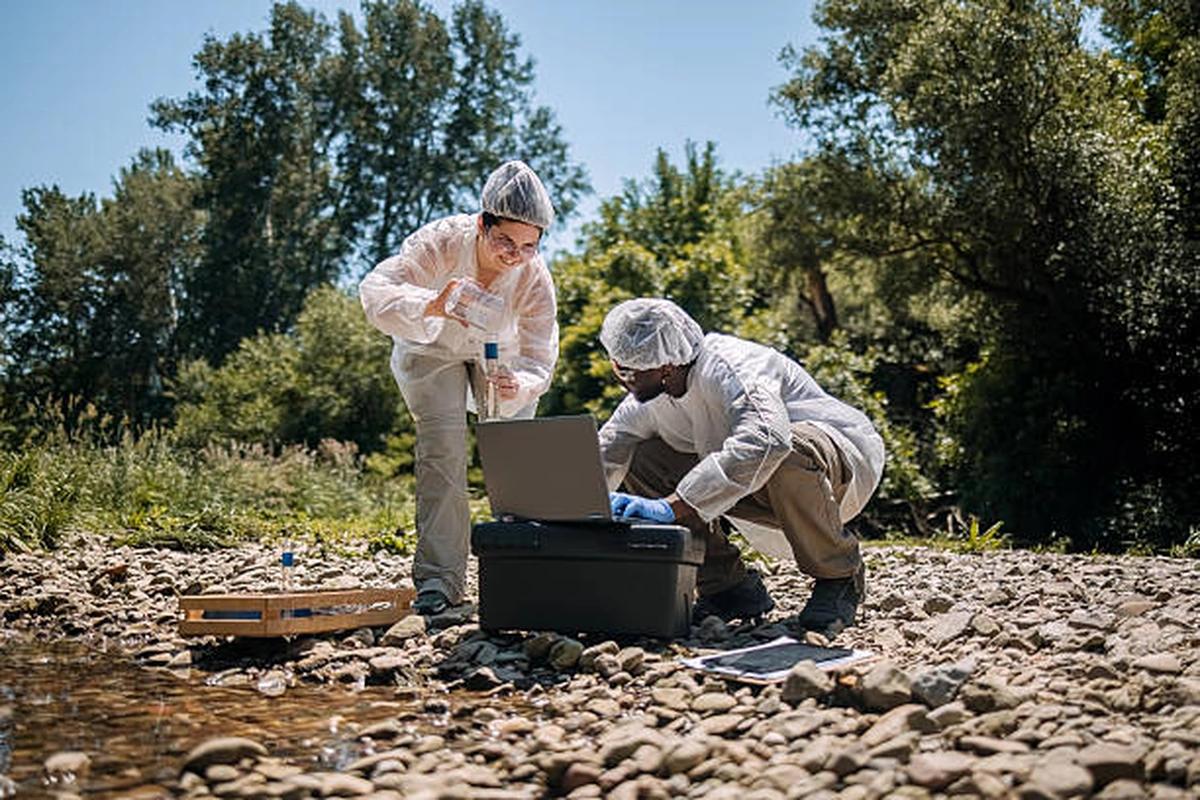
Training on AI for Groundwater & Aquifer Sustainability Modeling
Learn AI-powered groundwater and aquifer sustainability modeling using machine learning, GIS and geospatial analytics for water resource planning and management
Next intake
20 Jul 2026 · Nakuru
Duration
5 days
Live instruction
Delivery
Physical + Virtual
Cohort based
Level
Intermediate
Working professionals
Certification
NITA reimbursable
For Kenyan cohorts
Language
English
All materials
About this programme
Groundwater is a critical resource for agriculture, industry, ecosystems, and domestic water supply. However, increasing demand, climate variability, and unsustainable extraction practices have intensified the need for advanced tools to monitor, predict, and manage groundwater resources effectively. Artificial Intelligence (AI) is emerging as a powerful solution for analyzing complex hydrogeological data, forecasting groundwater availability, and supporting sustainable aquifer management.
This course equips participants with practical skills in applying AI, machine learning, GIS, and geospatial analytics to groundwater and aquifer sustainability modeling. Through hands-on exercises, real-world datasets, and case studies, participants will learn how to integrate hydrological data, develop predictive models, assess groundwater recharge and depletion patterns, and support evidence-based water resource management decisions.
Duration
5 Days
Who Should Attend:
- Hydrologists
- Hydrogeologists
- Water Resource Managers
- Environmental Specialists
- GIS and Remote Sensing Professionals
- Water Utility Professionals
- Researchers and Academics
- Government Water Agencies
- Development Practitioners
- Environmental Consultants
What you'll walk away with
By the end of the training, participants will be able to:
- Understand AI applications in groundwater and aquifer management.
- Analyze groundwater and hydrogeological datasets.
- Apply machine learning techniques for groundwater prediction and modeling.
- Assess aquifer recharge, depletion, and sustainability trends.
- Integrate GIS and geospatial tools into groundwater management workflows.
- Develop data-driven groundwater monitoring and decision-support systems.
What we cover, module by module
Module 1: Fundamentals of AI, Hydrogeology & Groundwater Systems
- Introduction to groundwater and aquifer systems
- Fundamentals of AI and machine learning
- Hydrogeological data sources
- Groundwater sustainability concepts
- Applications of AI in water resource management
- Case Study: AI applications in groundwater resource planning.
- Practical Exercise: Explore groundwater and hydrogeological datasets.
Module 2: Groundwater Data Analysis & GIS Integration
- Groundwater monitoring data management
- GIS for groundwater mapping
- Spatial analysis of aquifer systems
- Remote sensing applications in groundwater studies
- Data preparation for AI modeling
- Case Study: Mapping groundwater potential zones.
- Practical Exercise: Create groundwater resource maps using GIS tools.
Module 3: Machine Learning for Groundwater Prediction
- Predictive modeling techniques
- Groundwater level forecasting
- Aquifer recharge estimation
- Water demand and supply analysis
- Model training and validation
- Case Study: Machine learning models for groundwater forecasting.
- Practical Exercise: Develop a groundwater prediction model.
Module 4: Aquifer Sustainability Assessment & Risk Analysis
- Groundwater depletion assessment
- Climate change impacts on aquifers
- Drought and water scarcity analysis
- Sustainability indicators
- Risk assessment and scenario modeling
- Case Study: Assessing aquifer sustainability under changing climatic conditions.
- Practical Exercise: Conduct aquifer risk and sustainability analysis.
Module 5: AI-Powered Groundwater Management & Action Planning
- Decision-support systems for groundwater management
- Groundwater monitoring dashboards
- Policy and regulatory considerations
- Action planning and implementation strategies
- Emerging trends in AI and water resources
- Case Study: Successful AI-driven groundwater management initiatives.
- Practical Exercise: Develop and present an AI-Based Groundwater Sustainability Management Plan.
Where the change lands
Individual Impact
- Apply AI techniques to groundwater analysis and forecasting.
- Improve hydrogeological data analysis skills.
- Develop groundwater sustainability models.
- Strengthen expertise in water resource management technologies.
Organizational Impact
- Improved groundwater monitoring and planning.
- Enhanced water resource sustainability strategies.
- Better forecasting of groundwater availability and risks.
- Data-driven decision-making for aquifer management.
Dates and locations
Upcoming intakes
Every intake is limited to a small cohort. Booking closes when a date fills or three weeks before the start, whichever comes first.
| City | Starts | Ends | Delivery | Book |
|---|---|---|---|---|
NakuruNext | 20 Jul 2026 | 24 Jul 2026 | In-Person | Book |
Kigali | 20 Jul 2026 | 24 Jul 2026 | In-Person | Book |
Accra | 20 Jul 2026 | 24 Jul 2026 | In-Person | Book |
Kisumu | 27 Jul 2026 | 31 Jul 2026 | In-Person | Book |
Johannesburg | 27 Jul 2026 | 31 Jul 2026 | In-Person | Book |
Dakar | 27 Jul 2026 | 31 Jul 2026 | In-Person | Book |
- NakuruNext
20 Jul → 24 Jul·In-Person
Book this intake - Kigali
20 Jul → 24 Jul·In-Person
Book this intake - Accra
20 Jul → 24 Jul·In-Person
Book this intake - Kisumu
27 Jul → 31 Jul·In-Person
Book this intake - Johannesburg
27 Jul → 31 Jul·In-Person
Book this intake - Dakar
27 Jul → 31 Jul·In-Person
Book this intake
Common questions.
Still not sure? Send us a note and a facilitator will get back to you within a business day.
You may also like.
Programmes in the same discipline that participants often pair with this course.
 Hybrid5 days
Learn how AI, satellite imagery, and remote sensing technologies support drought monitoring and water scarcity forecasting.
 Hybrid5 days
Build expertise in AI-driven water resource planning to strengthen water security, resilience, and climate adaptation.
 Hybrid5 days
Build practical skills in smart water meter analytics, demand forecasting, and AI-enabled water utility optimization.
Course finder
Find the right course for you
Prefer to talk it through? Send us an enquiry and a facilitator will scope a fit within a business day.
For corporate teams
Training 10+ professionals?
We deliver Training on AI for Groundwater & Aquifer Sustainability Modeling in-house at your offices, at a venue we arrange, or fully virtual. Customise the curriculum against your KPIs, and get a bespoke price for the cohort size you need.