
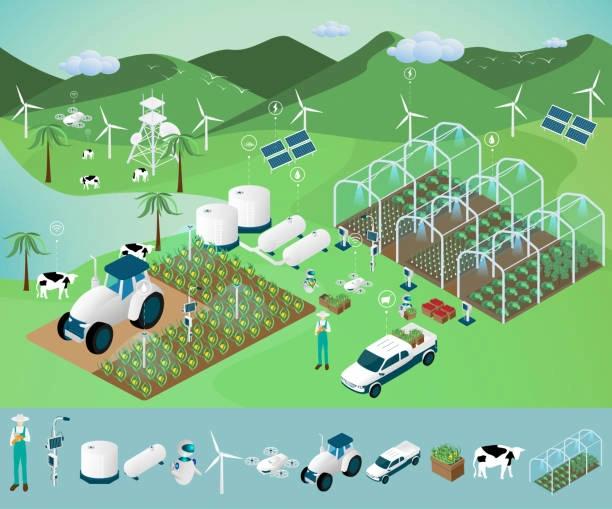
Training on Climate Change Adaptation Strategies for Sustainable Farming
Develop practical skills to strengthen food security through climate-smart farming, sustainability innovation, and adaptive resource management.
Next intake
20 Jul 2026 · Nakuru
Duration
10 days
Live instruction
Delivery
Physical + Virtual
Cohort based
Level
Intermediate
Working professionals
Certification
NITA reimbursable
For Kenyan cohorts
Language
English
All materials
About this programme
Climate change continues to reshape agricultural productivity, food security, and rural livelihoods globally. This course provides a strategic understanding of how to develop and implement climate-resilient agricultural practices that ensure sustainability and productivity. Participants will gain the knowledge and tools to assess climate risks, plan adaptive responses, and integrate sustainability principles into agricultural systems. The course blends scientific insights, policy perspectives, and real-world applications to strengthen the capacity of professionals working in agriculture, environment, and development sectors.
Duration
10 Days
Who Should Attend
- Farmers and agricultural practitioners
- Agricultural extension officers
- Agronomists and crop scientists
- Environmental consultants
- Policy makers in agriculture and environmental sectors
- Students and researchers in agricultural and environmental sciences
What you'll walk away with
By the end of this course, participants will be able to:
-
Understand the key drivers and impacts of climate change on agriculture and food security.
-
Develop and apply strategies for climate-resilient and sustainable agricultural systems.
-
Integrate climate information, forecasting, and digital tools into agricultural decision-making.
-
Identify and manage financial, policy, and institutional mechanisms for supporting adaptation.
-
Design and monitor climate adaptation action plans that promote inclusivity and resilience.
-
Leverage innovation and technology to enhance productivity and environmental sustainability.
-
Strengthen organizational and community capacity to implement adaptive farming practices.
What we cover, module by module
Module 1: Understanding Climate Change and its Impact on Agriculture
-
Overview of climate change drivers and global trends
-
Effects on crops, livestock, and ecosystems
-
Climate risk assessment and vulnerability mapping
-
Case Study:Evaluating regional agricultural risks under changing climatic patterns
Module 2: Climate-Resilient Agricultural Practices
-
Soil and water conservation strategies
-
Crop diversification and integrated pest management
-
Efficient irrigation and sustainable water use
-
Case Study: Applying climate-smart farming practices to improve yield stability
Module 3: Sustainable Resource Management
-
Soil fertility enhancement and biodiversity conservation
-
Agroforestry, organic farming, and regenerative agriculture
-
Ecosystem-based adaptation for sustainable landscapes
-
Case Study:Reviving degraded lands through sustainable resource management
Module 4: Climate Information, Forecasting, and Decision Support Tools
-
Accessing and interpreting climate data
-
Integrating early warning systems into farm planning
-
Using decision-support systems for adaptive management
-
Case Study: Incorporating climate forecasts into planting schedules
Module 5: Policy, Finance, and Institutional Support for Adaptation
-
Climate policy frameworks and institutional coordination
-
Accessing climate finance for agricultural programs
-
Embedding adaptation strategies in national agricultural plans
-
Case Study: Structuring policies that drive sustainable agricultural investments
Module 6: Innovation and Technology for Climate Adaptation
-
Digital agriculture, precision farming, and remote sensing applications
-
Use of ICT tools and mobile platforms in adaptation planning
-
Renewable energy technologies for farming operations
-
Case Study: Leveraging agri-tech innovation for resilient food systems
Module 7: Gender and Social Inclusion in Climate Adaptation
-
Addressing gender disparities in adaptation planning
-
Inclusive strategies for vulnerable groups
-
Empowering women and youth in sustainable agriculture
-
Case Study: Building gender-sensitive adaptation frameworks in rural areas
Module 8: Monitoring, Evaluation, and Learning (MEL) for Climate Adaptation
-
Developing adaptation performance indicators
-
Tracking resilience and sustainability outcomes
-
Building adaptive learning into project cycles
-
Case Study:Monitoring progress in climate adaptation projects
Module 9: Community-Based Adaptation and Local Knowledge Systems
-
Role of local knowledge in adaptation planning
-
Strengthening farmer networks and local resilience systems
-
Participatory approaches for sustainable community engagement
-
Case Study: Integrating indigenous knowledge into modern adaptation initiatives
Module 10: Developing a Climate Change Adaptation Action Plan
-
Frameworks for designing farm-level adaptation plans
-
Stakeholder engagement and resource mobilization
-
Presenting and refining action plans for implementation
-
Case Study:Crafting a climate adaptation roadmap for agricultural resilience
Where the change lands
Organizational Impact:
-
Strengthened capacity to design and manage climate-smart agricultural programs
-
Enhanced access to climate financing and sustainability partnerships
-
Improved policy alignment with global climate and food security goals
-
Data-driven decision-making for agricultural and environmental planning
Individual Impact:
-
Enhanced understanding of climate adaptation principles and practices
-
Ability to design and implement context-specific adaptation strategies
-
Strengthened leadership in sustainable agriculture and climate resilience
-
Increased professional competence in policy formulation and project design
Dates and locations
Upcoming intakes
Every intake is limited to a small cohort. Booking closes when a date fills or three weeks before the start, whichever comes first.
| City | Starts | Ends | Delivery | Book |
|---|---|---|---|---|
NakuruNext | 20 Jul 2026 | 31 Jul 2026 | In-Person | Book |
Kigali | 20 Jul 2026 | 31 Jul 2026 | In-Person | Book |
Accra | 20 Jul 2026 | 31 Jul 2026 | In-Person | Book |
Kisumu | 27 Jul 2026 | 07 Aug 2026 | In-Person | Book |
Johannesburg | 27 Jul 2026 | 07 Aug 2026 | In-Person | Book |
Dakar | 27 Jul 2026 | 07 Aug 2026 | In-Person | Book |
- NakuruNext
20 Jul → 31 Jul·In-Person
Book this intake - Kigali
20 Jul → 31 Jul·In-Person
Book this intake - Accra
20 Jul → 31 Jul·In-Person
Book this intake - Kisumu
27 Jul → 07 Aug·In-Person
Book this intake - Johannesburg
27 Jul → 07 Aug·In-Person
Book this intake - Dakar
27 Jul → 07 Aug·In-Person
Book this intake
Common questions.
Still not sure? Send us a note and a facilitator will get back to you within a business day.
You may also like.
Programmes in the same discipline that participants often pair with this course.
 Hybrid5 days
Build skills to apply AI and data analytics for smarter, more productive, and resilient agricultural systems.
 Hybrid5 days
Unlock agri-finance opportunities with this practical 5-module course—designed to help farmers and agribusinesses access funding, manage risk, and grow sustainably.
 Hybrid10 days
Gain expertise in advanced pest management. Our training course covers critical topics like integrated pest management (IPM), biological control, and chemical application techniques.
Course finder
Find the right course for you
Prefer to talk it through? Send us an enquiry and a facilitator will scope a fit within a business day.
For corporate teams
Training 10+ professionals?
We deliver Training on Climate Change Adaptation Strategies for Sustainable Farming in-house at your offices, at a venue we arrange, or fully virtual. Customise the curriculum against your KPIs, and get a bespoke price for the cohort size you need.