
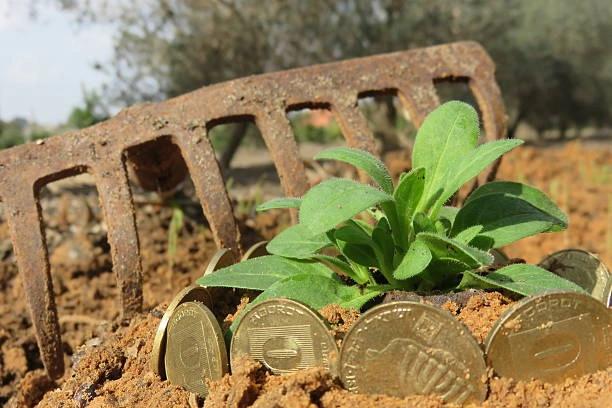
Training on De-Risking Agricultural Investments
Learn to manage and mitigate agricultural investment risks in this strategic 5-module course—ideal for unlocking private capital and fostering resilient agri-financing.
Next intake
20 Jul 2026 · Nakuru
Duration
5 days
Live instruction
Delivery
Physical + Virtual
Cohort based
Level
Intermediate
Working professionals
Certification
NITA reimbursable
For Kenyan cohorts
Language
English
All materials
About this programme
This course provides agricultural investors, policymakers, development partners, and financial institutions with comprehensive strategies to de-risk investments in agriculture. The agricultural sector presents unique risks, from climate shocks to market volatility, that can deter private investment. This course equips stakeholders with the tools to design risk mitigation frameworks, apply blended finance approaches, and foster enabling environments that attract sustainable agri-investment.
Duration
5 Days
Who Should Attend
-
Agri-Investors and Agribusinesses
-
Financial Institutions and Development Banks
-
Government and Policy Planners
-
Risk Analysts and Investment Consultants
-
Donors, NGOs, and Multilateral Agencies
What you'll walk away with
By the end of this course, participants will:
-
Identify and assess investment risks across agricultural value chains
-
Explore public and private instruments for agricultural risk mitigation
-
Design financial instruments such as guarantees, insurance, and hedging tools
-
Structure blended finance approaches and PPPs to attract private capital
-
Integrate ESG and resilience considerations into agri-investment plans
What we cover, module by module
Module 1: Introduction to Agricultural Investment Risks
- Understanding agricultural investment landscapes and opportunities
- Types of risks in agriculture: production, market, financial, policy, and climate risks
- Risk-return dynamics across agricultural value chains
- Investment climate diagnostics and enabling environments
- Challenges affecting agricultural investment decisions
- Case Study: Investor hesitancy in climate-sensitive agricultural production systems
- Practical Activity: Identifying key risks within selected agricultural value chains
Module 2: Agricultural Risk Assessment and Mitigation Strategies
- Principles of agricultural risk assessment and management
- Crop insurance, weather-index insurance, and price stabilization tools
- Credit guarantees and agricultural financing risk-sharing mechanisms
- Diversification and resilience-building approaches
- Role of extension services and technical assistance in reducing investment risks
- Case Study: Risk mitigation approaches used in commercial farming projects
- Practical Exercise: Matching risk mitigation tools to agricultural investment risks
Module 3: Blended Finance and Innovative Funding Models
- Introduction to blended finance in agriculture
- Structuring concessional financing, grants, and private capital investments
- Impact investing and sustainable agriculture financing
- Agribusiness accelerators, venture capital, and development finance institutions
- Financial modeling for agricultural investment projects
- Case Study: Successful blended finance models supporting agribusiness growth
- Practical Activity: Designing a blended finance structure for an agricultural project
Module 4: Public-Private Partnerships and Institutional Frameworks
- Public-private partnership (PPP) models in agriculture
- Legal, regulatory, and institutional frameworks supporting agricultural investment
- Infrastructure financing for irrigation, storage, logistics, and value chains
- Leveraging donor and government programs to attract private investment
- Stakeholder coordination and partnership development
- Case Study: PPP-driven agricultural infrastructure development initiatives
- Group Activity: Developing a PPP concept for an agribusiness investment opportunity
Module 5: ESG, Climate Resilience, and Sustainable Agricultural Investments
- Environmental, Social, and Governance (ESG) principles in agricultural finance
- Climate-smart agriculture and resilience-building strategies
- Monitoring and evaluation frameworks for agricultural investments
- Investment performance tracking and adaptive management tools
- Sustainable investment planning and long-term impact measurement
- Case Study: Integrating ESG and climate resilience into agricultural investment portfolios
- Final Project: Developing a de-risking and sustainable investment strategy for an agricultural enterprise or fund
Where the change lands
Organizational Impact
-
The organization will be able to structure more attractive and secure agricultural investment proposals, which will significantly increase its capacity to raise capital.
-
By implementing robust risk mitigation strategies, the organization can protect its portfolio from market volatility, climate shocks, and other unforeseen risks.
-
The ability to professionally manage and communicate risks positions the organization as a trustworthy and reliable partner for investors and financial institutions.
-
The training will enable the organization to make more informed, evidence-based decisions about where and how to invest in agriculture, leading to better long-term outcomes.
Personal Impact
-
The participant will gain a highly specialized skill set that bridges agriculture and finance, making them a valuable asset in the growing field of impact investing and agribusiness.
-
Expertise in de-risking agricultural investments is a key skill for career progression into senior financial advisory, portfolio management, or executive leadership roles.
-
The individual will be able to contribute directly to the organization's financial success and sustainability by identifying and mitigating high-stakes risks.
-
The training will empower the participant with the knowledge to confidently structure, negotiate, and manage complex agricultural investment deals.
Dates and locations
Upcoming intakes
Every intake is limited to a small cohort. Booking closes when a date fills or three weeks before the start, whichever comes first.
| City | Starts | Ends | Delivery | Book |
|---|---|---|---|---|
NakuruNext | 20 Jul 2026 | 24 Jul 2026 | In-Person | Book |
Kigali | 20 Jul 2026 | 24 Jul 2026 | In-Person | Book |
Accra | 20 Jul 2026 | 24 Jul 2026 | In-Person | Book |
Kisumu | 27 Jul 2026 | 31 Jul 2026 | In-Person | Book |
Johannesburg | 27 Jul 2026 | 31 Jul 2026 | In-Person | Book |
Dakar | 27 Jul 2026 | 31 Jul 2026 | In-Person | Book |
- NakuruNext
20 Jul → 24 Jul·In-Person
Book this intake - Kigali
20 Jul → 24 Jul·In-Person
Book this intake - Accra
20 Jul → 24 Jul·In-Person
Book this intake - Kisumu
27 Jul → 31 Jul·In-Person
Book this intake - Johannesburg
27 Jul → 31 Jul·In-Person
Book this intake - Dakar
27 Jul → 31 Jul·In-Person
Book this intake
Common questions.
Still not sure? Send us a note and a facilitator will get back to you within a business day.
You may also like.
Programmes in the same discipline that participants often pair with this course.
 Hybrid5 days
Build skills to apply AI and data analytics for smarter, more productive, and resilient agricultural systems.
 Hybrid5 days
Unlock agri-finance opportunities with this practical 5-module course—designed to help farmers and agribusinesses access funding, manage risk, and grow sustainably.
 Hybrid10 days
Gain expertise in advanced pest management. Our training course covers critical topics like integrated pest management (IPM), biological control, and chemical application techniques.
Course finder
Find the right course for you
Prefer to talk it through? Send us an enquiry and a facilitator will scope a fit within a business day.
For corporate teams
Training 10+ professionals?
We deliver Training on De-Risking Agricultural Investments in-house at your offices, at a venue we arrange, or fully virtual. Customise the curriculum against your KPIs, and get a bespoke price for the cohort size you need.