
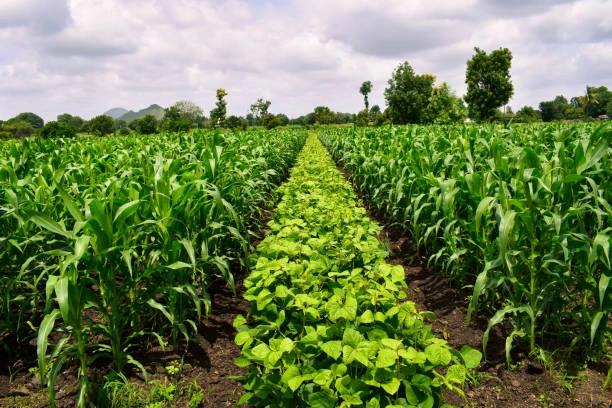
Training on Developing Climate-Resilient Crop Varieties
Master the development and deployment of climate-resilient crop varieties to support sustainable agriculture and agribusiness growth.
Next intake
20 Jul 2026 · Nakuru
Duration
5 days
Live instruction
Delivery
Physical + Virtual
Cohort based
Level
Intermediate
Working professionals
Certification
NITA reimbursable
For Kenyan cohorts
Language
English
All materials
About this programme
This course provides professionals, agribusiness leaders, and agricultural scientists with advanced knowledge and strategies to develop crop varieties capable of withstanding climate-related challenges such as drought, heat, floods, and emerging pests. The course emphasizes modern breeding techniques, biotechnology applications, and adaptive management approaches to enhance productivity, ensure food security, and support sustainable agriculture in changing climatic conditions.
Duration
5 Days
Who Should Attend
-
Plant breeders and crop scientists
-
Agronomists and agricultural researchers
-
Seed companies and agribusiness managers
-
Agricultural extension officers
-
Policy makers and sustainability practitioners in agriculture
What you'll walk away with
By the end of this course, participants will be able to:
-
Understand the impact of climate change on crop production.
-
Apply modern breeding techniques to develop climate-resilient varieties.
-
Incorporate biotechnology and genetic tools into crop improvement programs.
-
Evaluate and select crop varieties based on environmental adaptability and performance.
-
Develop strategies to integrate resilient crops into sustainable agricultural systems.
What we cover, module by module
Module 1: Climate Change and Crop Production
-
Overview of climate change impacts on agriculture
-
Identifying climate-sensitive crops and regions
-
Strategies for climate risk mitigation in crop production
-
Case Study: Adapting a staple crop to increasing temperature and water stress
Module 2: Principles of Plant Breeding
-
Classical and modern breeding approaches
-
Selection techniques and hybridization methods
-
Breeding for drought, heat, and pest resistance
-
Case Study: Developing a drought-tolerant maize variety
Module 3: Biotechnology and Genetic Tools
-
Use of molecular markers and genomic selection
-
CRISPR and gene-editing applications in crop improvement
-
Evaluating transgenic approaches for climate resilience
-
Case Study: Implementing marker-assisted selection in rice breeding
Module 4: Crop Evaluation and Performance Assessment
-
Field trials and experimental design
-
Phenotyping for stress tolerance and yield performance
-
Data analysis and decision-making for variety selection
-
Case Study: Comparing performance of multiple wheat varieties under variable rainfall
Module 5: Integration and Deployment Strategies
-
Scaling resilient varieties for commercial and smallholder farming
-
Seed systems, quality assurance, and distribution channels
-
Policy and regulatory considerations for climate-resilient crops
-
Case Study: Introducing resilient crops into a regional agricultural system
Where the change lands
Organizational Impact:
-
Enhanced crop portfolio resilience against climate risks
-
Improved productivity and food security outcomes
-
Strengthened market competitiveness and brand reputation
-
Support for sustainable agriculture and climate adaptation strategies
Individual Impact:
-
Mastery of modern breeding techniques and climate-resilient crop strategies
-
Enhanced decision-making in crop selection and farm planning
-
Ability to implement sustainable, adaptive agricultural practices
-
Strengthened professional capacity in agribusiness and research
Dates and locations
Upcoming intakes
Every intake is limited to a small cohort. Booking closes when a date fills or three weeks before the start, whichever comes first.
| City | Starts | Ends | Delivery | Book |
|---|---|---|---|---|
NakuruNext | 20 Jul 2026 | 24 Jul 2026 | In-Person | Book |
Kigali | 20 Jul 2026 | 24 Jul 2026 | In-Person | Book |
Accra | 20 Jul 2026 | 24 Jul 2026 | In-Person | Book |
Kisumu | 27 Jul 2026 | 31 Jul 2026 | In-Person | Book |
Johannesburg | 27 Jul 2026 | 31 Jul 2026 | In-Person | Book |
Dakar | 27 Jul 2026 | 31 Jul 2026 | In-Person | Book |
- NakuruNext
20 Jul → 24 Jul·In-Person
Book this intake - Kigali
20 Jul → 24 Jul·In-Person
Book this intake - Accra
20 Jul → 24 Jul·In-Person
Book this intake - Kisumu
27 Jul → 31 Jul·In-Person
Book this intake - Johannesburg
27 Jul → 31 Jul·In-Person
Book this intake - Dakar
27 Jul → 31 Jul·In-Person
Book this intake
Common questions.
Still not sure? Send us a note and a facilitator will get back to you within a business day.
You may also like.
Programmes in the same discipline that participants often pair with this course.
 Hybrid5 days
Build skills to apply AI and data analytics for smarter, more productive, and resilient agricultural systems.
 Hybrid5 days
Unlock agri-finance opportunities with this practical 5-module course—designed to help farmers and agribusinesses access funding, manage risk, and grow sustainably.
 Hybrid10 days
Gain expertise in advanced pest management. Our training course covers critical topics like integrated pest management (IPM), biological control, and chemical application techniques.
Course finder
Find the right course for you
Prefer to talk it through? Send us an enquiry and a facilitator will scope a fit within a business day.
For corporate teams
Training 10+ professionals?
We deliver Training on Developing Climate-Resilient Crop Varieties in-house at your offices, at a venue we arrange, or fully virtual. Customise the curriculum against your KPIs, and get a bespoke price for the cohort size you need.