
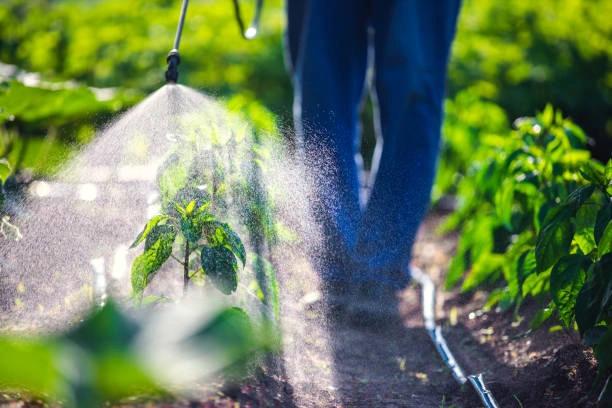
Training on Integrated Pest and Disease Management for Agronomy
Gain practical skills in pest and disease control for healthier crops. Learn IPM, field diagnosis, chemical safety, and biological control to boost productivity and resilience.
Next intake
20 Jul 2026 · Nakuru
Duration
5 days
Live instruction
Delivery
Physical + Virtual
Cohort based
Level
Intermediate
Working professionals
Certification
NITA reimbursable
For Kenyan cohorts
Language
English
All materials
About this programme
This course is designed to equip agricultural professionals, extension officers, and farmers with comprehensive knowledge and practical skills for identifying, preventing, and managing crop pests and diseases. With increasing pressure from climate change and global trade, sustainable pest and disease control is essential for maintaining food security and boosting crop productivity. Through classroom instruction and case-based learning, participants will explore integrated pest management (IPM), modern surveillance tools, biological control methods, and chemical safety practices.
Duration
5 Days
Who Should Attend
-
Agronomists and Agricultural Extension Officers
-
Commercial and Smallholder Farmers
-
Crop Protection Specialists
-
Agricultural Researchers and Technicians
-
Government Plant Health Officers
-
Input Suppliers and Agro-Dealers
What you'll walk away with
By the end of the course, participants will be able to:
-
Identify common crop pests and diseases based on symptoms and lifecycle
-
Understand the principles of Integrated Pest Management (IPM)
-
Apply biological, cultural, and chemical control methods effectively
-
Use digital tools and scouting techniques for pest monitoring
-
Design pest and disease control programs based on ecological and economic thresholds
What we cover, module by module
Module 1: Foundations of Pest and Disease Management
- Introduction to major crop pests, diseases, and plant pathogens
- Economic impact of pest and disease outbreaks on agricultural productivity
- Basics of pest biology, disease cycles, and epidemiology
- Factors contributing to pest infestations and disease spread
- Case Study: Impact of Fall Armyworm and fungal diseases on crop production
- Practical: Identify common pest and disease symptoms in field crops
Module 2: Pest and Disease Identification and Diagnosis
- Field scouting and crop inspection techniques
- Visual identification of pests, nutrient deficiencies, and diseases
- Use of mobile apps, digital tools, and rapid diagnostic methods
- Laboratory and on-site disease diagnosis procedures
- Case Study: Early detection systems for crop disease management
- Practical: Conduct a field diagnosis and pest identification exercise
Module 3: Integrated Pest Management (IPM) Strategies
- Principles and components of Integrated Pest Management (IPM)
- Cultural, biological, mechanical, and physical pest control methods
- Use of resistant crop varieties and crop rotation strategies
- Biological control using predators, parasitoids, and bio-pesticides
- Case Study: Successful IPM programs in horticulture and cereal farming
- Practical: Develop an IPM strategy for a selected crop production system
Module 4: Safe and Effective Chemical Pest Control
- Understanding pesticide classifications, labels, and formulations
- Safe handling, storage, and application of pesticides
- Managing pesticide resistance and minimizing environmental impact
- National and international regulations for pesticide use and compliance
- Case Study: Reducing pesticide misuse through farmer training programs
- Practical: Demonstrate safe pesticide mixing, calibration, and application techniques
Module 5: Pest Surveillance, Monitoring, and Control Planning
- Designing pest scouting and surveillance programs
- Data collection, reporting systems, and early warning approaches
- Community-based pest and disease monitoring initiatives
- Developing integrated pest and disease management action plans
- Case Study: National pest surveillance and early warning systems
- Final Project: Develop a comprehensive pest and disease management plan for a target farming area
Where the change lands
Organizational Impact
-
Boost profitability and resilience by cutting pesticide costs and preventing crop losses.
-
Strengthen reputation through sustainable, compliant, and eco-friendly practices.
-
Improve crop quality and marketability with healthier, residue-free yields.
Personal Impact
-
Gain in-demand expertise in Integrated Pest Management (IPM).
-
Advance into senior farm management or advisory roles.
-
Drive sustainability and profitability with evidence-based decisions.
Dates and locations
Upcoming intakes
Every intake is limited to a small cohort. Booking closes when a date fills or three weeks before the start, whichever comes first.
| City | Starts | Ends | Delivery | Book |
|---|---|---|---|---|
NakuruNext | 20 Jul 2026 | 24 Jul 2026 | In-Person | Book |
Kigali | 20 Jul 2026 | 24 Jul 2026 | In-Person | Book |
Accra | 20 Jul 2026 | 24 Jul 2026 | In-Person | Book |
Kisumu | 27 Jul 2026 | 31 Jul 2026 | In-Person | Book |
Johannesburg | 27 Jul 2026 | 31 Jul 2026 | In-Person | Book |
Dakar | 27 Jul 2026 | 31 Jul 2026 | In-Person | Book |
- NakuruNext
20 Jul → 24 Jul·In-Person
Book this intake - Kigali
20 Jul → 24 Jul·In-Person
Book this intake - Accra
20 Jul → 24 Jul·In-Person
Book this intake - Kisumu
27 Jul → 31 Jul·In-Person
Book this intake - Johannesburg
27 Jul → 31 Jul·In-Person
Book this intake - Dakar
27 Jul → 31 Jul·In-Person
Book this intake
Common questions.
Still not sure? Send us a note and a facilitator will get back to you within a business day.
You may also like.
Programmes in the same discipline that participants often pair with this course.
 Hybrid5 days
Build skills to apply AI and data analytics for smarter, more productive, and resilient agricultural systems.
 Hybrid5 days
Unlock agri-finance opportunities with this practical 5-module course—designed to help farmers and agribusinesses access funding, manage risk, and grow sustainably.
 Hybrid10 days
Gain expertise in advanced pest management. Our training course covers critical topics like integrated pest management (IPM), biological control, and chemical application techniques.
Course finder
Find the right course for you
Prefer to talk it through? Send us an enquiry and a facilitator will scope a fit within a business day.
For corporate teams
Training 10+ professionals?
We deliver Training on Integrated Pest and Disease Management for Agronomy in-house at your offices, at a venue we arrange, or fully virtual. Customise the curriculum against your KPIs, and get a bespoke price for the cohort size you need.