
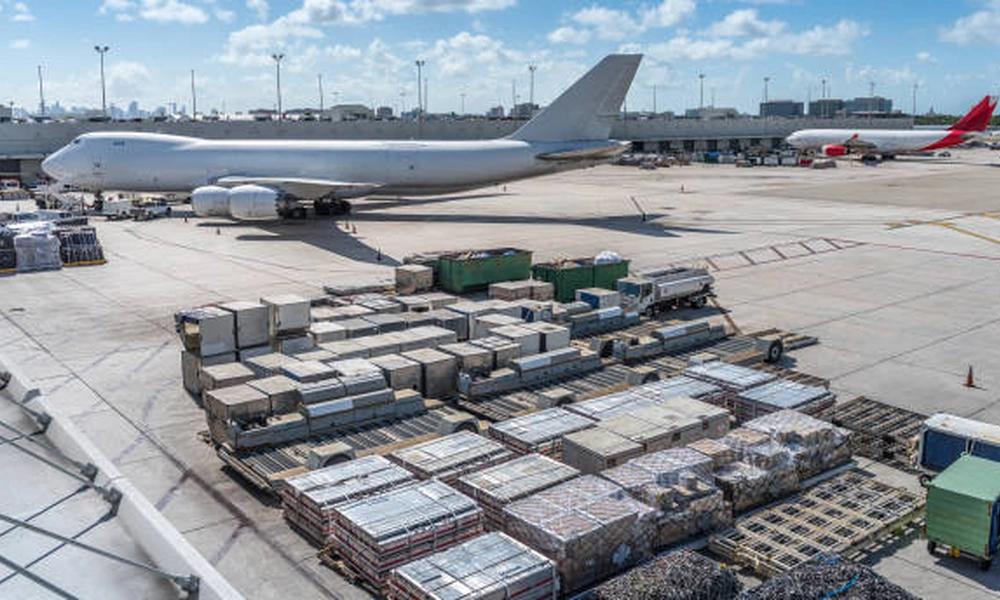
Training on Air Cargo Logistics and Freight Forwarding
Master air cargo logistics and freight forwarding. Learn IATA regulations, documentation, and consolidation strategies. Intermediate.
Next intake
20 Jul 2026 · Nakuru
Duration
5 days
Live instruction
Delivery
Physical + Virtual
Cohort based
Level
Intermediate
Working professionals
Certification
NITA reimbursable
For Kenyan cohorts
Language
English
All materials
About this programme
This intermediate course delves into the specialized world of air cargo logistics and freight forwarding. Participants will learn the intricacies of moving goods by air, including IATA regulations, aircraft types, cargo handling, and documentation. The curriculum emphasizes the unique dynamics of air freight, such as speed, security, and the role of freight forwarders in orchestrating global shipments.
Who Should Attend:
-
Air Freight Managers
-
Freight Forwarders and Customs Brokers
-
Cargo Operations Coordinators
-
Supply Chain Planners dealing with high-value or time-sensitive goods
What you'll walk away with
-
Navigate IATA regulations, including dangerous goods and live animal shipments.
-
Manage air cargo documentation: Air Waybill (AWB), Master AWB, and House AWB.
-
Execute freight forwarding operations, including consolidation and deconsolidation.
-
Select appropriate aircraft types and carriers based on cargo characteristics.
What we cover, module by module
Module 1: The Air Cargo Industry Landscape
-
Key players: airlines, cargo ground handlers, freight forwarders, and regulators.
-
Types of air cargo: general cargo, express, pharmaceuticals, perishables, and dangerous goods.
-
Industry organizations: IATA, FIATA, and their roles.
-
Case Study/Hands-on Exercise: Analyze the air cargo supply chain for a shipment of pharmaceuticals from a manufacturer in Europe to a hospital in Africa, identifying each stakeholder and their responsibilities.
Module 2: Air Cargo Documentation and Regulations
-
The Air Waybill (AWB): functions, issuance, and data elements.
-
Master AWB vs. House AWB in freight forwarding.
-
IATA Dangerous Goods Regulations (DGR): classification, packaging, labeling, and documentation.
-
Case Study/Hands-on Exercise: Complete a Shippers Declaration for Dangerous Goods (DGD) for a shipment of lithium batteries, ensuring all fields are accurately populated and packaging requirements are met.
Module 3: Air Cargo Handling and Terminal Operations
-
Processes at origin: acceptance, build-up, screening, and customs.
-
Processes at destination: break-down, customs clearance, and delivery.
-
Special handling: temperature-controlled, vulnerable, and valuable cargo.
-
Case Study/Hands-on Exercise: Develop a handling plan for a shipment of live tropical fish, specifying temperature requirements, water quality needs, and coordination with the airline's cargo terminal.
Module 4: Freight Forwarding Operations and Consolidation
-
The role of the freight forwarder as a non-vessel operating common carrier (NVOCC) in air.
-
Consolidation strategies: building ULDs (Unit Load Devices) to maximize space utilization.
-
Selecting airlines and routes based on cost, transit time, and capacity.
-
Case Study/Hands-on Exercise: For a portfolio of 20 LTL air shipments bound for the same region, create a consolidation plan, determining the number and type of ULDs needed and calculating the cost savings versus individual shipments.
Module 5: Air Cargo Security, Compliance, and Technology
-
Security programs: Known Shipper, Regulated Agent, and screening requirements.
-
Advanced air cargo technologies: track-and-trace, RFID, and air cargo community systems.
-
Emerging trends: drone delivery, air cargo digitalization, and e-commerce impact.
-
Case Study/Hands-on Exercise: Review a security incident where undeclared dangerous goods were discovered in a consignment, identify the security gaps, and propose a corrective action plan to prevent recurrence.
Where the change lands
Organizational Impacts:
-
Improved transit times for time-sensitive and high-value shipments.
-
Enhanced compliance with IATA dangerous goods regulations.
-
Optimized cost structure through consolidation and carrier selection.
Individual Impacts:
-
Mastery of air cargo documentation and IATA regulations.
-
Expertise in freight forwarding operations and carrier management.
-
Skills to manage air cargo bookings, consolidations, and track-and-trace.
Dates and locations
Upcoming intakes
Every intake is limited to a small cohort. Booking closes when a date fills or three weeks before the start, whichever comes first.
| City | Starts | Ends | Delivery | Book |
|---|---|---|---|---|
NakuruNext | 20 Jul 2026 | 24 Jul 2026 | In-Person | Book |
Kigali | 20 Jul 2026 | 24 Jul 2026 | In-Person | Book |
Accra | 20 Jul 2026 | 24 Jul 2026 | In-Person | Book |
Kisumu | 27 Jul 2026 | 31 Jul 2026 | In-Person | Book |
Johannesburg | 27 Jul 2026 | 31 Jul 2026 | In-Person | Book |
Dakar | 27 Jul 2026 | 31 Jul 2026 | In-Person | Book |
- NakuruNext
20 Jul → 24 Jul·In-Person
Book this intake - Kigali
20 Jul → 24 Jul·In-Person
Book this intake - Accra
20 Jul → 24 Jul·In-Person
Book this intake - Kisumu
27 Jul → 31 Jul·In-Person
Book this intake - Johannesburg
27 Jul → 31 Jul·In-Person
Book this intake - Dakar
27 Jul → 31 Jul·In-Person
Book this intake
Common questions.
Still not sure? Send us a note and a facilitator will get back to you within a business day.
You may also like.
Programmes in the same discipline that participants often pair with this course.
 Hybrid10 days
Elevate your distribution center. Learn to integrate WMS with robotics and AI for scalable, high-efficiency logistics.
 Hybrid5 days
Master cold chain logistics. Learn temperature-controlled packaging, GDP compliance, and risk management for sensitive products.
 Hybrid5 days
Ensure compliant cross-border shipments. This course covers customs entry, valuation, and trade program utilization.
Course finder
Find the right course for you
Prefer to talk it through? Send us an enquiry and a facilitator will scope a fit within a business day.
For corporate teams
Training 10+ professionals?
We deliver Training on Air Cargo Logistics and Freight Forwarding in-house at your offices, at a venue we arrange, or fully virtual. Customise the curriculum against your KPIs, and get a bespoke price for the cohort size you need.