
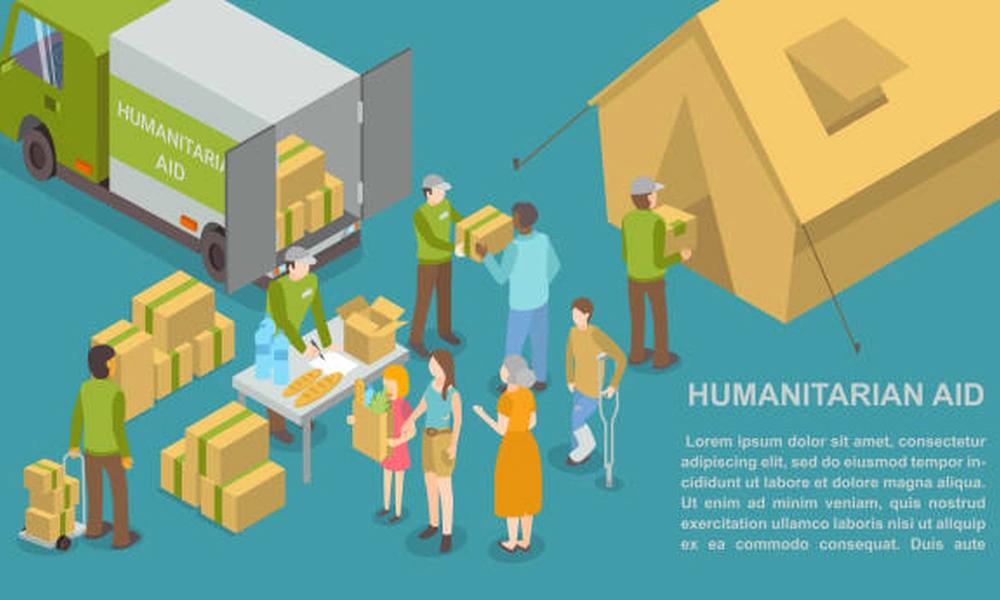
Training on Humanitarian Logistics for Remote and Insecure Environments
Next intake
20 Jul 2026 · Nakuru
Duration
10 days
Live instruction
Delivery
Physical + Virtual
Cohort based
Level
Advanced
Working professionals
Certification
NITA reimbursable
For Kenyan cohorts
Language
English
All materials
About this programme
This advanced course provides specialized training on humanitarian logistics in remote, insecure, and infrastructure-poor environments. Participants will learn to operate in contexts with limited road access, active conflict, bureaucratic constraints, and extreme weather, ensuring that life-saving supplies reach affected populations despite significant challenges.
Who Should Attend:
-
Humanitarian Logistics Managers in high-risk contexts
-
Emergency Response Team Leaders
-
NGO Operations Managers in remote field sites
-
Supply Chain Advisors for conflict zone operations
What you'll walk away with
-
Plan and execute logistics operations in remote and insecure environments.
-
Manage air, road, and alternative transport in infrastructure-poor settings.
-
Navigate access constraints including checkpoints, customs, and bureaucratic delays.
-
Ensure staff safety and cargo security in high-risk contexts.
What we cover, module by module
Module 1: The Challenge of Remote and Insecure Logistics
-
Defining remote, insecure, and infrastructure-poor environments.
-
Key challenges: access denial, violence, poor roads, extreme weather, and bureaucratic obstacles.
-
The logistics operating environment analysis.
-
Case Study/Hands-on Exercise: Analyze the logistics challenges in a remote conflict-affected region, identifying key risks and mitigation strategies.
Module 2: Transport Modes in Remote Environments
-
Air operations: fixed-wing, helicopters, and airdrops.
-
Road transport: convoy management, route selection, and vehicle preparation.
-
River, animal, and foot transport for final-mile delivery.
-
Case Study/Hands-on Exercise: Select appropriate transport modes for a supply pipeline to a remote, inaccessible area, considering cargo type, volume, security, and infrastructure.
Module 3: Air Operations in Humanitarian Logistics
-
Humanitarian air services: UNHAS and commercial charter.
-
Airfield assessment, cargo handling, and load planning.
-
Safety, security, and coordination with aviation authorities.
-
Case Study/Hands-on Exercise: Plan an airlift operation to deliver supplies to a remote airstrip, including cargo prioritization, load planning, and ground handling arrangements.
Module 4: Convoy Management and Road Security
-
Planning and leading humanitarian convoys in insecure areas.
-
Convoy composition, communication, and security protocols.
-
Managing checkpoints, ambush risk, and negotiation with armed actors.
-
Case Study/Hands-on Exercise: Develop a convoy management plan for a 200km road movement through insecure territory, including route selection, security arrangements, and contingency plans.
Module 5: Warehouse and Inventory Management in Remote Settings
-
Establishing and operating warehouses in remote locations.
-
Inventory management with limited connectivity (offline systems, paper-based).
-
Stock rotation, expiry management, and cold chain in remote areas.
-
Case Study/Hands-on Exercise: Design a remote warehouse operation for a field site with no internet or reliable electricity, including inventory tracking and stock management procedures.
Module 6: Navigating Access Constraints and Bureaucratic Hurdles
-
Negotiating access with authorities, armed groups, and communities.
-
Managing permits, visas, customs clearance, and movement approvals.
-
Humanitarian access frameworks and principled negotiation.
-
Case Study/Hands-on Exercise: Develop an access strategy for a humanitarian operation in a context with multiple checkpoints, bureaucratic delays, and access denials.
Module 7: Security Management for Logistics Operations
-
Integrating security risk management into logistics planning.
-
Secure communications, tracking, and journey management.
-
Contingency planning: ambush, abduction, and emergency evacuation.
-
Case Study/Hands-on Exercise: Conduct a security risk assessment for a logistics hub in a volatile area and develop a security plan for logistics staff and assets.
Module 8: Cold Chain and Medical Logistics in Remote Settings
-
Maintaining cold chain for vaccines and temperature-sensitive medicines.
-
Solar-powered refrigeration and alternative power sources.
-
Managing medical logistics: warehousing, distribution, and waste management.
-
Case Study/Hands-on Exercise: Design a cold chain system for a remote health program, including equipment selection, power supply, temperature monitoring, and contingency.
Module 9: Last-Mile Distribution in Insecure Environments
-
Distribution models in insecure contexts: mobile teams, community-based, and voucher systems.
-
Managing crowds, security, and diversion risks.
-
Monitoring and verification in insecure environments.
-
Case Study/Hands-on Exercise: Develop a last-mile distribution plan for a food security program in an area with active conflict, including security, community engagement, and monitoring.
Module 10: Staff Safety, Well-Being, and Contingency
-
Duty of care for logistics staff in remote and insecure environments.
-
Medical evacuation (MEDEVAC) and security evacuation plans.
-
Staff well-being: rest, rotation, and psychosocial support.
-
Case Study/Hands-on Exercise: Develop a staff safety and contingency plan for a remote logistics team, including medical evacuation, security evacuation, and communication protocols.
Where the change lands
Organizational Impacts:
-
Sustained delivery of supplies in highly challenging environments.
-
Reduced loss or diversion of cargo in insecure contexts.
-
Improved staff safety and operational continuity.
Individual Impacts:
-
Mastery of logistics in remote, insecure, and infrastructure-poor environments.
-
Expertise in air operations, convoy management, and alternative transport.
-
Skills to manage security, customs, and access constraints.
Dates and locations
Upcoming intakes
Every intake is limited to a small cohort. Booking closes when a date fills or three weeks before the start, whichever comes first.
| City | Starts | Ends | Delivery | Book |
|---|---|---|---|---|
NakuruNext | 20 Jul 2026 | 31 Jul 2026 | In-Person | Book |
Kigali | 20 Jul 2026 | 31 Jul 2026 | In-Person | Book |
Accra | 20 Jul 2026 | 31 Jul 2026 | In-Person | Book |
Kisumu | 27 Jul 2026 | 07 Aug 2026 | In-Person | Book |
Johannesburg | 27 Jul 2026 | 07 Aug 2026 | In-Person | Book |
Dakar | 27 Jul 2026 | 07 Aug 2026 | In-Person | Book |
- NakuruNext
20 Jul → 31 Jul·In-Person
Book this intake - Kigali
20 Jul → 31 Jul·In-Person
Book this intake - Accra
20 Jul → 31 Jul·In-Person
Book this intake - Kisumu
27 Jul → 07 Aug·In-Person
Book this intake - Johannesburg
27 Jul → 07 Aug·In-Person
Book this intake - Dakar
27 Jul → 07 Aug·In-Person
Book this intake
Common questions.
Still not sure? Send us a note and a facilitator will get back to you within a business day.
You may also like.
Programmes in the same discipline that participants often pair with this course.
 Hybrid5 days
Manage displacement sites effectively. This intermediate course covers site planning, community participation, and camp closure.
 Hybrid5 days
Master Cash and Voucher Assistance (CVA) in humanitarian action. Learn modality selection, market assessment, and delivery mechanisms.
 Hybrid10 days
Protect children in emergencies, displacement, and armed conflict. This course covers CPMS, child-friendly spaces, and reintegration.
Course finder
Find the right course for you
Prefer to talk it through? Send us an enquiry and a facilitator will scope a fit within a business day.
For corporate teams
Training 10+ professionals?
We deliver Training on Humanitarian Logistics for Remote and Insecure Environments in-house at your offices, at a venue we arrange, or fully virtual. Customise the curriculum against your KPIs, and get a bespoke price for the cohort size you need.