

Training on Lean Six Sigma for Logistics and Supply Chain
Drive operational excellence in transportation and warehousing. This course covers root cause analysis, SPC, and continuous improvement.
Next intake
20 Jul 2026 · Nakuru
Duration
10 days
Live instruction
Delivery
Physical + Virtual
Cohort based
Level
Advanced
Working professionals
Certification
NITA reimbursable
For Kenyan cohorts
Language
English
All materials
About this programme
This advanced course applies Lean Six Sigma methodologies specifically to the logistics and supply chain environment. Participants will learn to identify and eliminate waste, reduce process variation, and drive continuous improvement across transportation, warehousing, and distribution operations. The focus is on practical application of DMAIC (Define, Measure, Analyze, Improve, Control) framework to achieve measurable operational excellence.
Who Should Attend:
-
Continuous Improvement Managers
-
Operations Excellence Leaders
-
Logistics Process Engineers
-
Supply Chain Managers seeking Green/Black Belt certification
What you'll walk away with
-
Apply the DMAIC methodology to logistics and supply chain processes.
-
Utilize value stream mapping to identify waste and inefficiencies.
-
Perform root cause analysis using tools like 5 Whys, fishbone diagrams, and Pareto analysis.
-
Implement statistical process control to monitor and sustain improvements.
What we cover, module by module
Module 1: Introduction to Lean Six Sigma in Logistics
-
Defining Lean (waste reduction) and Six Sigma (variation reduction).
-
The 8 wastes (DOWNTIME) in logistics: defects, overproduction, waiting, non-utilized talent, transportation, inventory, motion, excess processing.
-
The DMAIC framework and its application in supply chain.
-
Case Study/Hands-on Exercise: Walk through a sample logistics process (e.g., order picking) and identify examples of the 8 wastes, quantifying the impact of each.
Module 2: Define Phase: Project Charter and VOC
-
Developing a project charter with clear problem statement, goals, and scope.
-
Capturing the Voice of the Customer (VOC) internally and externally.
-
Defining critical-to-quality (CTQ) requirements for logistics processes.
-
Case Study/Hands-on Exercise: Create a project charter for reducing the error rate in a warehouse picking operation, defining scope, business case, and measurable project goals.
Module 3: Measure Phase: Process Mapping and Data Collection
-
Creating detailed process maps (SIPOC, swimlane diagrams) for logistics flows.
-
Identifying key metrics and developing a data collection plan.
-
Understanding measurement system analysis (MSA) for logistics data.
-
Case Study/Hands-on Exercise: Develop a SIPOC diagram and a data collection plan for the inbound receiving process at a distribution center, identifying the key metrics to measure (e.g., receipt time, accuracy).
Module 4: Measure Phase: Baseline Performance and Capability
-
Calculating process baseline metrics: cycle time, first-pass yield, and defects per unit.
-
Introduction to process capability in logistics contexts.
-
Creating visual dashboards for baseline performance.
-
Case Study/Hands-on Exercise: Calculate the baseline first-pass yield and cycle time for a sample order-to-delivery process, using provided data to establish a performance baseline.
Module 5: Analyze Phase: Root Cause Analysis
-
Applying root cause analysis tools: 5 Whys, fishbone (Ishikawa) diagrams, and Pareto analysis.
-
Using failure mode and effects analysis (FMEA) for logistics processes.
-
Identifying critical inputs affecting key outputs.
-
Case Study/Hands-on Exercise: Perform a root cause analysis on a high rate of damaged shipments. Use a fishbone diagram to categorize potential causes and a Pareto chart to prioritize the most significant contributors.
Module 6: Analyze Phase: Data Analysis and Hypothesis Testing
-
Introduction to basic statistics for logistics: distributions, central tendency, and variation.
-
Using hypothesis testing (t-tests, chi-square) to validate root causes.
-
Analyzing transportation and warehouse data for patterns.
-
Case Study/Hands-on Exercise: Use a t-test to compare the average transit times of two different carriers for the same lane, determining if there is a statistically significant difference.
Module 7: Improve Phase: Generating and Selecting Solutions
-
Brainstorming and evaluating improvement ideas.
-
Using Lean tools: 5S, Kanban, standard work, and mistake-proofing (poka-yoke).
-
Piloting solutions and conducting cost-benefit analysis.
-
Case Study/Hands-on Exercise: Design a 5S implementation plan for a warehouse packing station, including sorting, setting in order, shining, standardizing, and sustaining. Estimate the expected productivity improvement.
Module 8: Improve Phase: Implementation and Pilot
-
Developing an implementation plan and piloting improvements.
-
Using design of experiments (DOE) principles for complex logistics processes.
-
Managing change and engaging frontline employees.
-
Case Study/Hands-on Exercise: Develop a pilot plan for a new slotting strategy in a warehouse, defining success metrics, pilot duration, and a plan for measuring results before scaling.
Module 9: Control Phase: Sustaining Improvements
-
Developing control plans and standard operating procedures (SOPs).
-
Implementing statistical process control (SPC) charts for key metrics.
-
Establishing process ownership and ongoing monitoring.
-
Case Study/Hands-on Exercise: Create a control chart (e.g., p-chart or u-chart) for the error rate in a picking process and define control limits and response rules for when the process goes out of control.
Module 10: Lean Six Sigma Project Management and Culture
-
Leading and managing improvement projects.
-
Building a culture of continuous improvement in logistics.
-
Preparing for Green Belt or Black Belt certification.
-
Case Study/Hands-on Exercise: Present a full DMAIC project case study (based on course exercises) to a simulated leadership team, highlighting the problem, analysis, solution, and sustained results.
Where the change lands
Organizational Impacts:
-
Significant reduction in operational costs and waste.
-
Improved process efficiency and cycle times.
-
Enhanced quality and accuracy in order fulfillment.
Individual Impacts:
-
Mastery of Lean Six Sigma tools (value stream mapping, DMAIC, root cause analysis).
-
Proficiency in statistical process control for logistics processes.
-
Skills to lead cross-functional improvement projects.
Dates and locations
Upcoming intakes
Every intake is limited to a small cohort. Booking closes when a date fills or three weeks before the start, whichever comes first.
| City | Starts | Ends | Delivery | Book |
|---|---|---|---|---|
NakuruNext | 20 Jul 2026 | 31 Jul 2026 | In-Person | Book |
Kigali | 20 Jul 2026 | 31 Jul 2026 | In-Person | Book |
Accra | 20 Jul 2026 | 31 Jul 2026 | In-Person | Book |
Kisumu | 27 Jul 2026 | 07 Aug 2026 | In-Person | Book |
Johannesburg | 27 Jul 2026 | 07 Aug 2026 | In-Person | Book |
Dakar | 27 Jul 2026 | 07 Aug 2026 | In-Person | Book |
- NakuruNext
20 Jul → 31 Jul·In-Person
Book this intake - Kigali
20 Jul → 31 Jul·In-Person
Book this intake - Accra
20 Jul → 31 Jul·In-Person
Book this intake - Kisumu
27 Jul → 07 Aug·In-Person
Book this intake - Johannesburg
27 Jul → 07 Aug·In-Person
Book this intake - Dakar
27 Jul → 07 Aug·In-Person
Book this intake
Common questions.
Still not sure? Send us a note and a facilitator will get back to you within a business day.
You may also like.
Programmes in the same discipline that participants often pair with this course.
 Hybrid10 days
Elevate your distribution center. Learn to integrate WMS with robotics and AI for scalable, high-efficiency logistics.
 Hybrid5 days
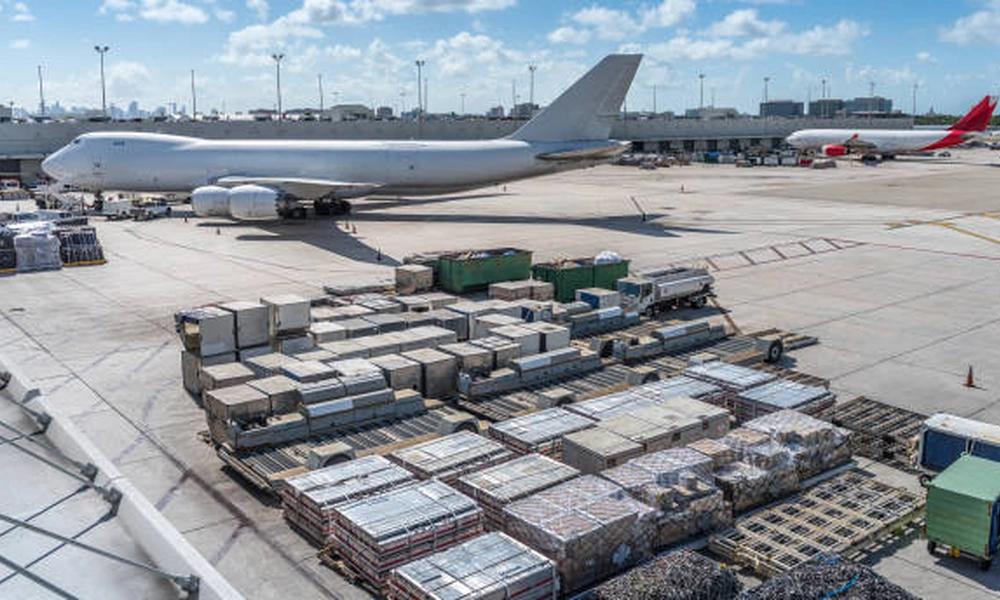
Master air cargo logistics and freight forwarding. Learn IATA regulations, documentation, and consolidation strategies. Intermediate.
 Hybrid5 days
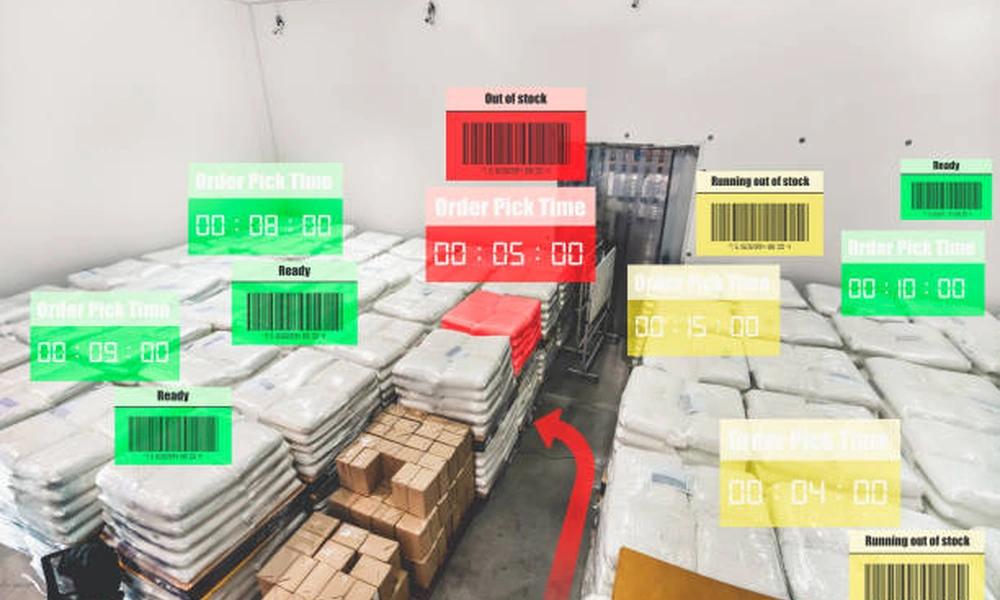
Master cold chain logistics. Learn temperature-controlled packaging, GDP compliance, and risk management for sensitive products.
Course finder
Find the right course for you
Prefer to talk it through? Send us an enquiry and a facilitator will scope a fit within a business day.
For corporate teams
Training 10+ professionals?
We deliver Training on Lean Six Sigma for Logistics and Supply Chain in-house at your offices, at a venue we arrange, or fully virtual. Customise the curriculum against your KPIs, and get a bespoke price for the cohort size you need.